What Is a Mini Split AC? The Ultimate Beginner’s Guide to Ductless Cooling (2026)
You have seen them in hotels, modern homes, and restaurants: those sleek, white rectangular units mounted high on the wall, whispering cool air into the room.
They are called Ductless Mini Splits. And right now, they are the fastest-growing trend in American HVAC.
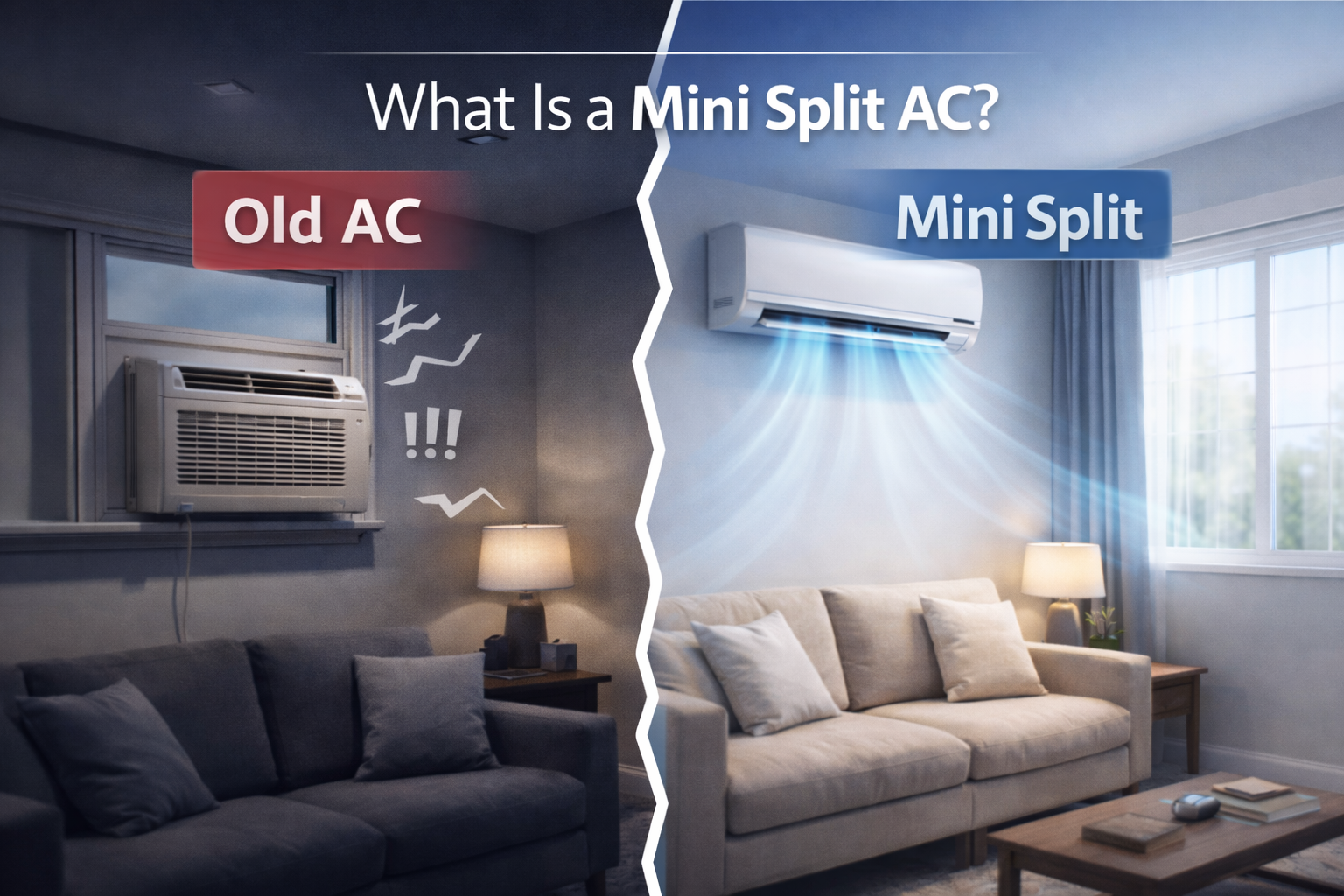
If you are tired of noisy window units that block your view, or if your central air system is costing you a fortune to cool empty rooms, a mini split might be the perfect solution.
In this comprehensive guide, we will answer every question you have: What are they? How do they work? What size do you need? And can you really install one yourself?
Still researching mini splits?
Start here 👉 The Full Mini Split Guide in 2026
What Exactly Is a Mini Split? 🏠
A Mini Split (or Ductless Heat Pump) is an air conditioning system that is split into two parts:
- The Outdoor Unit (Compressor): The noisy engine that sits outside your house.
- The Indoor Unit (Head): The quiet air handler mounted on your wall.
The “Mini” part? They are smaller than massive central air condensers. The “Split” part? The two components are separated but connected by a bundle of copper pipes and wires passed through a small 3-inch hole in the wall. No bulky ductwork required.
Why Is Everyone Switching to Mini Splits? (Pros & Cons)
Before you buy, you need to weigh the benefits against the drawbacks.
✅ The Pros
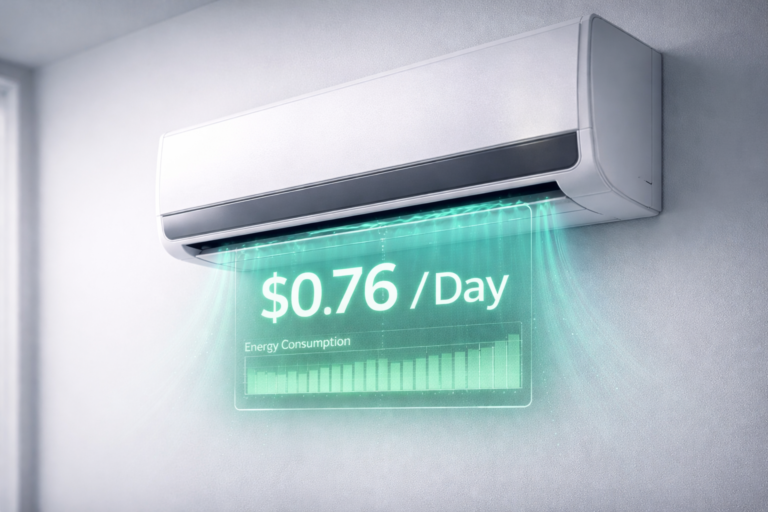
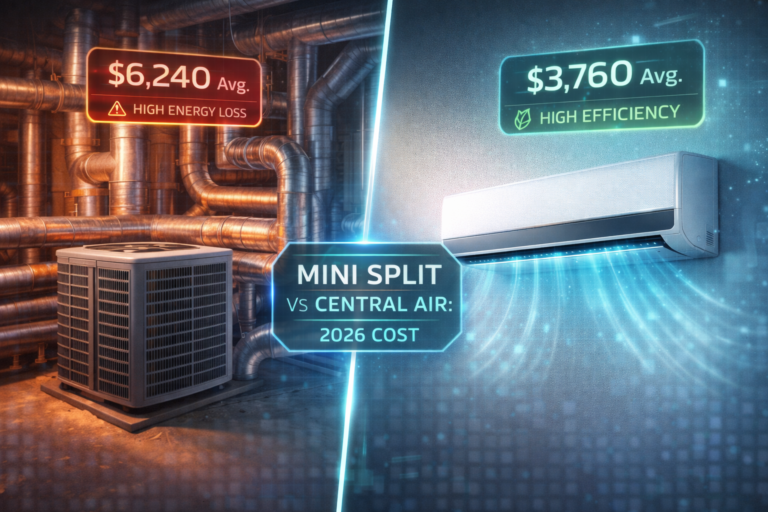
- Insane Efficiency: They use Inverter Technology to run at low speeds, saving you up to 40% on energy bills compared to traditional AC.Read more: [Do Mini Splits Use a Lot of Electricity? Cost Breakdown]
- Whisper Quiet: Unlike window units (50-60 dB), mini splits run at ~20 dB. You can barely hear them.Read more: [Best Mini Split Size for a Quiet Bedroom]
- Zone Cooling: You only cool the rooms you are using. Why freeze the whole house just to sleep in one bedroom?
- DIY Friendly: Brands like MrCool allow you to install them without a technician.
❌ The Cons
- Upfront Cost: Buying the unit is cheaper than central air, but more expensive than a window unit ($800 – $2,000).
- Aesthetics: Some people don’t like seeing a white box on their wall (though modern designs are getting sleeker).
- Maintenance: You must clean the filters regularly to prevent leaks.
Read more: Why is My Mini Split Leaking Water? Fixes
The Big Question: What Size Mini Split Do I Need? 📏
This is where 80% of buyers get it wrong. If you search “what size mini split do i need” on Google, you will see generic charts. Be careful.
Sizing isn’t just about square footage. It’s about ceiling height, insulation quality, and climate.
- Too Big: The unit short-cycles (turns on/off rapidly), leaving the room humid.
- Too Small: It runs 100% of the time and never cools the room.
The Quick Rule of Thumb:
- Small Room (150 sq ft): 6,000 – 9,000 BTU.
- Large Living Room (500 sq ft): 18,000 BTU.
- Garage or Workshop: You need to upsize significantly due to poor insulation.
Read more: Garage Mini Split Sizing Guide
💡 Stop Guessing: Don’t risk your money on a guess. Use our free tool to get an engineer-backed recommendation in seconds. 👉 Click Here to Use the Mini Split Sizing Calculator
Installation: Can You Do It Yourself? 🛠️
Historically, installing an AC required a licensed HVAC technician, specialized vacuum pumps, and expensive gauges.
Then came the “DIY” revolution. Today, systems like the MrCool DIY Gen-4 come with pre-charged lines. This means the refrigerant is already sealed inside. You simply click the connectors together.
Is it easy? It requires basic handyman skills (drilling a hole, using a wrench). If you can mount a TV and follow instructions, you can likely install a mini split.
Read the honest truth: Can You Install a Mini Split Yourself? An Engineer’s Guide
Single Zone vs. Multi-Zone
- Single Zone: One outdoor unit connected to one indoor head. Perfect for a garage, bedroom, or add-on room.
- Multi-Zone: One massive outdoor unit connected to 2, 3, 4, or even 5 indoor heads throughout your house. This is a full-home replacement solution.
Note: For mobile homes, multi-zone systems are excellent for replacing old, inefficient furnace ducts.
Read more: Mobile Home Mini Split Sizing Guide
Conclusion: Is a Mini Split Right for You?
If you want to save money on monthly bills, sleep in silence, and control the temperature of every room individually, then Yes.
The technology has matured, the prices have dropped, and installation has never been easier.
Ready to start? The first step is knowing your size. A mini split is an investment, so make sure you get the right one.