
Stop Guessing Your
Ductless AC Size.
Standard area calculators cause short-cycling and mold. Use our free, engineering-backed Manual J Lite app to calculate your exact BTU load based on volume, climate, and sun exposure.
HVAC Engineering, Made Simple.
We bridge the gap between complex thermodynamics and everyday homeowner decisions.
Precision Sizing App
Our V2 calculator goes beyond square footage, analyzing ceiling height, windows, and your exact climate zone to recommend the perfect BTU load.
Unbiased Brand Reviews
From Mitsubishi’s Hyper-Heat to budget-friendly MrCool DIY kits, we tear down the specs to show you what actually works in the real world.
Installation Intelligence
Avoid the $3,000 mistakes. Learn where to place your indoor heads, how to manage condensation lines, and electrical requirements.
Latest Engineering Guides
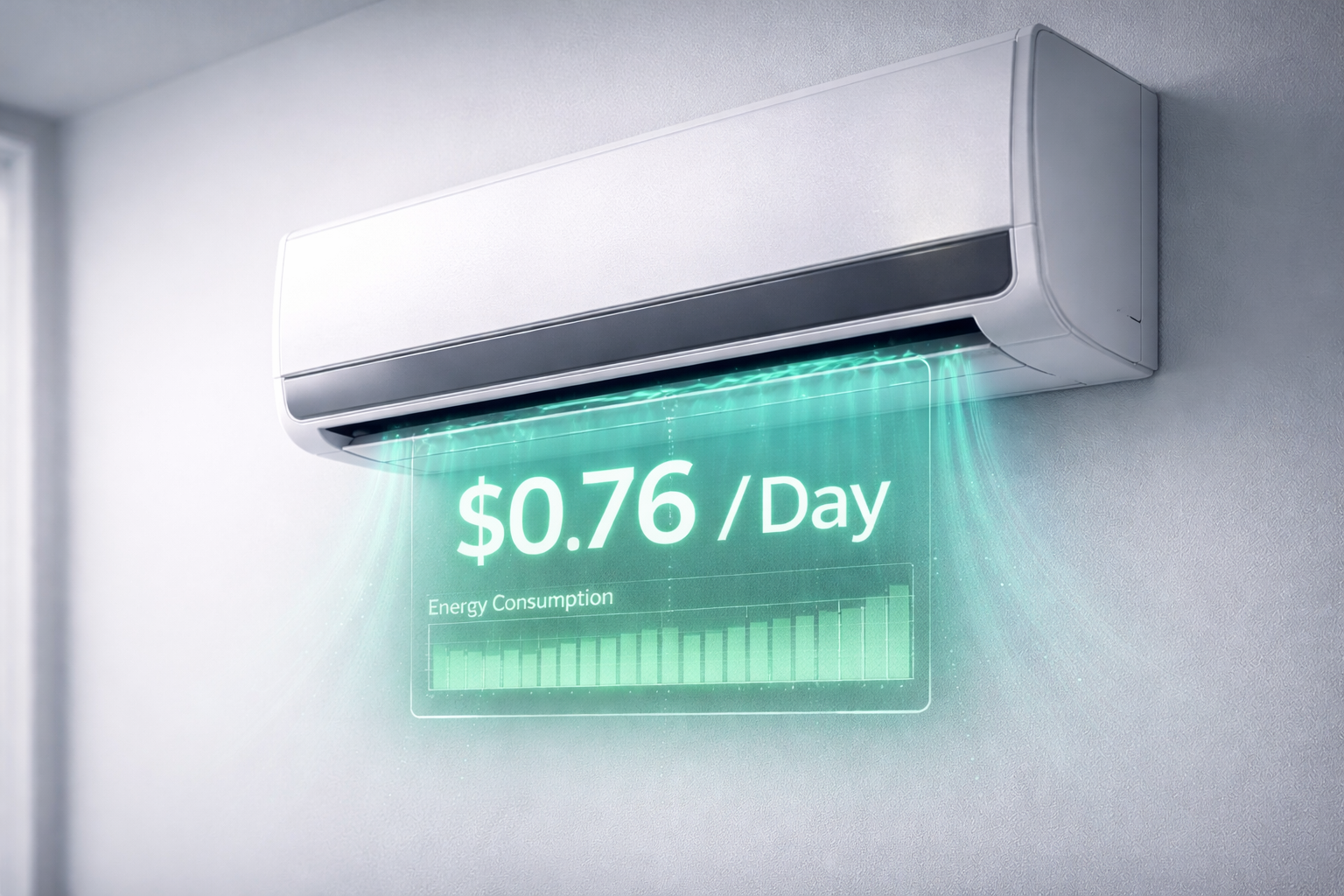
How Much Electricity Does a 12,000 BTU Mini Split Use Per Day?
We calculate the exact daily kWh and cost of running a 12k BTU inverter mini split, and explain why standard math is wrong.
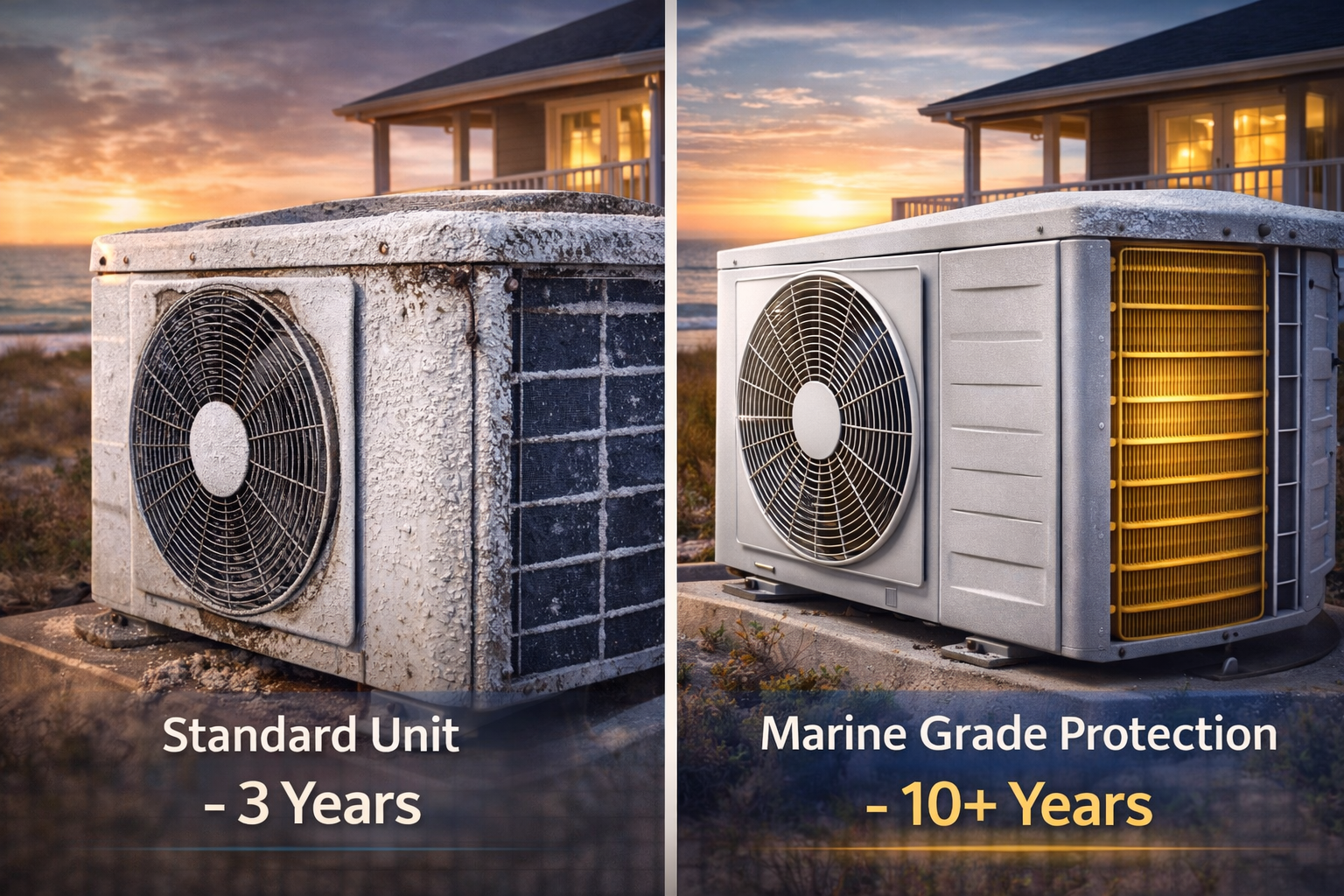
Mini Split Sizing for Coastal Homes: The Salt Spray Shield
Don’t let salt air kill your mini split. Learn why Gold Fin protection is essential and how to combat ocean humidity.
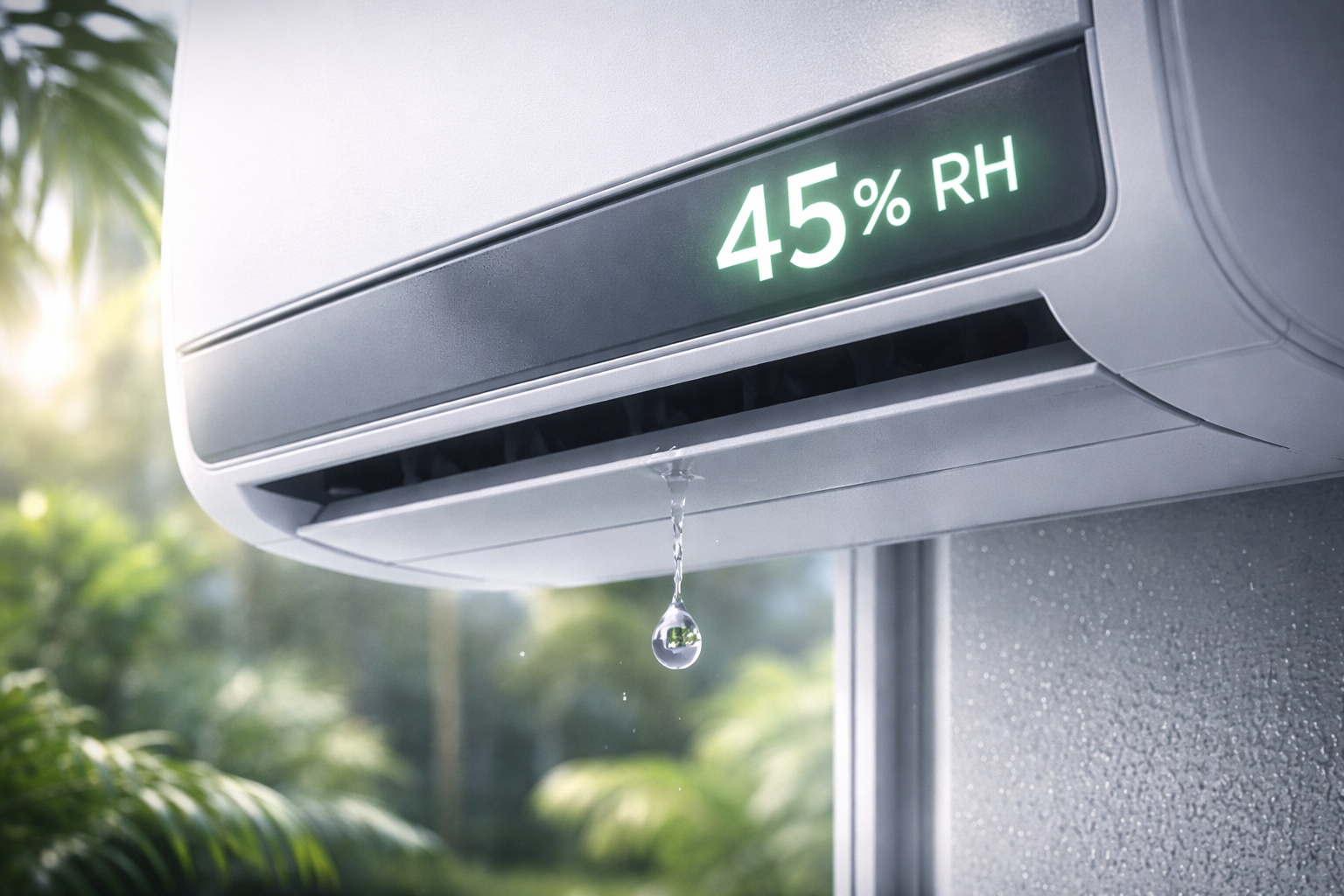
Do You Need a Bigger Mini Split in High Humidity Areas?
Stop oversizing. We reveal why oversized mini splits create “Cold Swamps” and how to size correctly for latent heat.
Ready to find your perfect fit?
Don’t buy an AC until you’ve run your room through our Manual J Lite engine. It’s 100% free and takes 30 seconds.
Start Mini split Calculator NowAnalyzing & Reviewing Top HVAC Brands
Master Your Ductless Journey
Navigate through our meticulously organized engineering and buying guides.
Sizing & BTUs
Tools and formulas to find the exact capacity for any room size.
ExploreBrand Reviews
Unbiased comparisons between premium, mid-tier, and DIY brands.
ExploreInstallation & DIY
Step-by-step guides on wiring, line sets, and vacuum pumps.
ExploreRunning Costs
SEER2 explained, daily electricity costs, and efficiency hacks.
ExploreFrequently Asked Questions
Quick answers to the most common ductless HVAC queries.
Are ductless mini splits cheaper to run than central AC?
Yes. Most modern mini splits use inverter technology, which adjusts the compressor speed rather than turning on and off constantly. Combined with the lack of ductwork (which loses up to 30% of energy), they are typically 20-50% more efficient than traditional central air systems.
Can I install a mini split myself (DIY)?
It depends on the system. Brands like MrCool offer specific “DIY” models with pre-charged linesets that require no specialized HVAC tools. However, for premium brands like Mitsubishi or Daikin, professional installation is heavily recommended and often required to maintain the warranty.
How long do ductless systems last?
With proper maintenance (regularly cleaning the indoor filters and outdoor condenser coils), a high-quality ductless mini split can last 15 to 20 years. Top-tier brands often back their systems with 10 to 12-year compressor and parts warranties.