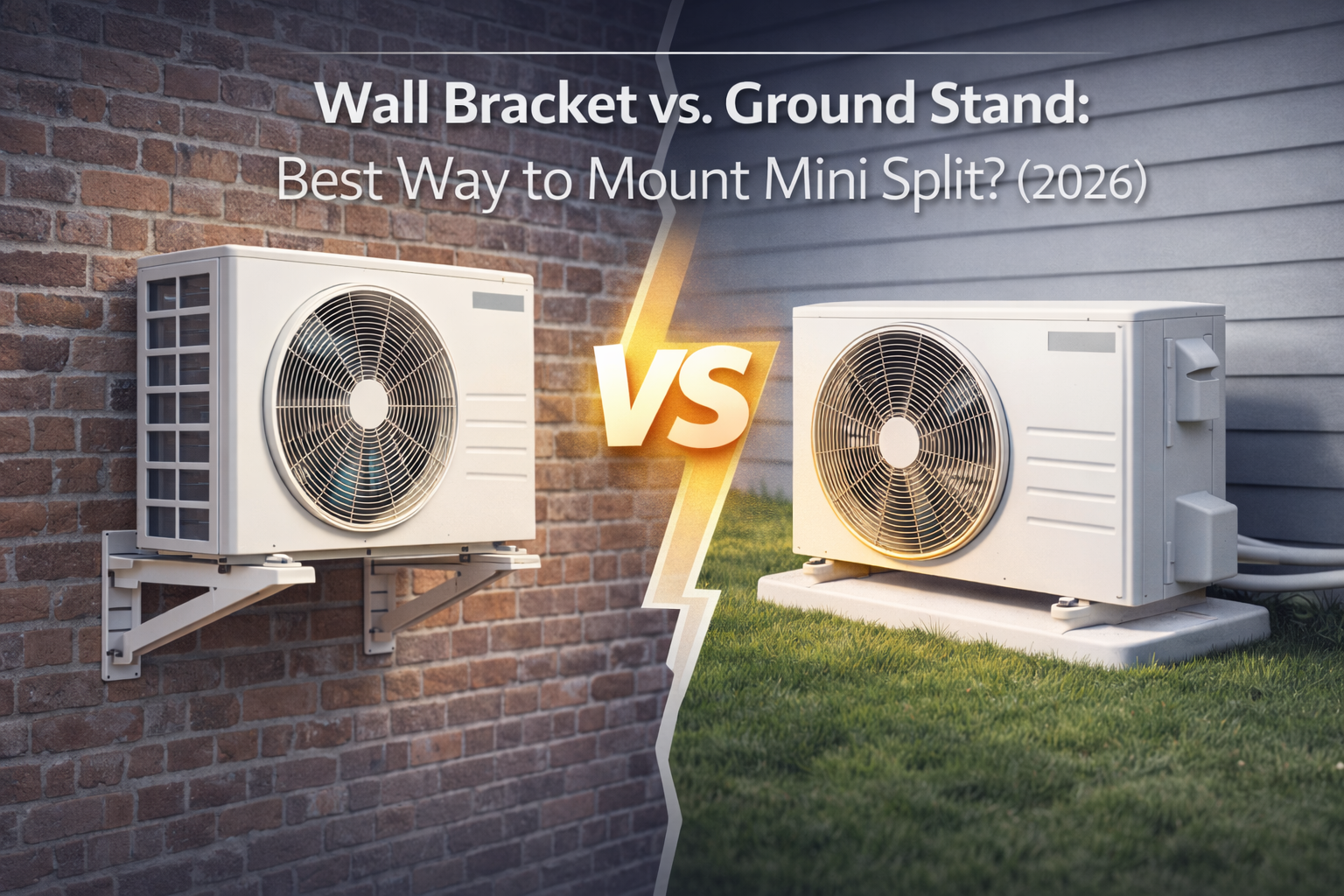
Wall Bracket vs. Ground Stand: How to Mount Mini Split Outdoor Unit?
You bought the mini split. You figured out the wiring. Now, you have a heavy 80-pound compressor box sitting in your driveway, and you have to decide where it lives.
You have two main options:
- Hang it on the side of your house (Wall Bracket).
- Sit it on the ground (Pad or Stand).
Most people just choose randomly, and they regret it later. Choosing the wrong mount can lead to vibrating walls, buried units in snow, or a rusted compressor.
In this guide, I will compare the pros and cons of each method so you can choose the right foundation for your climate and home type.
Option 1: The Wall Bracket 🧱
This is a set of L-shaped metal arms bolted into your home’s studs. The unit sits high off the ground.
✅ The Pros
- Snow Protection: If you live in the North (heavy snow), this is almost mandatory. Keeping the unit 2-3 feet off the ground ensures it won’t get buried in a blizzard (which stops it from working).
- Neat Look: It looks cleaner and keeps the unit away from lawnmowers and weed whackers.
- Drainage: Easier to route drain pipes when the unit is elevated.
❌ The Cons
- Vibration Noise (The Big One): The compressor vibrates. If you mount it to a wood-framed wall (especially a bedroom wall), that vibration can transfer inside. You might hear a low “hum” all night.
- Installation Difficulty: You need to find studs perfectly. Hanging 80 lbs on vinyl siding or brick requires skill.
💡 Pro Tip: If you choose a wall bracket, spend the extra $10 to buy “Rubber Vibration Isolators”. They act as shock absorbers between the unit and the bracket to kill the noise.
Option 2: The Ground Stand / Pad 🌱
This involves placing the unit on a concrete pad or a plastic composite base on the dirt.
✅ The Pros
- Dead Silent: Since it is not touching your house, zero vibration is transferred to your walls. This is the best option for bedrooms.
- Easy Install: No drilling into siding. Just level the ground and drop the pad.
- Service Access: Technicians prefer working on units that are on the ground rather than on a ladder.
❌ The Cons
- Snow & Debris: If it snows 12 inches, your unit is blocked. Also, leaves, dirt, and bugs are more likely to get inside the fins.
- Settling: Over 5 years, the ground might sink, causing the unit to tilt. You need a solid gravel base.
🛑 Special Warning: Mobile Homes
If you live in a manufactured or mobile home: NEVER use a Wall Bracket. Mobile home walls (2×4 or 2×3 studs) are rarely strong enough to support the dynamic weight of a compressor. The vibration will shake the entire trailer. Always use a Ground Stand for mobile homes.
Read more: Mobile Home Mini Split Sizing Guide
Verdict: Which Should You Buy?
Choose a Wall Bracket if:
- You live in a snowy climate (Snow line > 12 inches).
- You have limited yard space or a narrow walkway.
- Your wall is brick or concrete (which absorbs vibration well).
Choose a Ground Stand if:
- You live in a warm climate (Florida, Texas, Arizona).
- You are mounting it outside a bedroom and are sensitive to noise.
- You have a Vinyl Siding / Wood Frame house (prone to vibration).
- You live in a Mobile Home.
👉 If you’re still in research mode, don’t skip this 👉 A complete mini split walkthrough.
Conclusion
Don’t overthink it, but don’t cheap out either. Whether you go up or down, make sure the unit is level. A tilted unit will wear out the compressor bearings prematurely.
Still planning the project? Make sure you are mounting the right size unit. 👉 Check your BTU requirements here