Single Zone vs. Multi Zone Mini Split: Which is Best for Whole House Cooling? (2026)
You have decided to ditch your old central AC (or maybe you never had one). You want to cool 3 or 4 rooms in your house.
Now you face the million-dollar question: Should you buy ONE big outdoor unit connected to multiple indoor heads (Multi-Zone)? OR Should you buy separate individual units for each room (Single-Zones)?
Most homeowners assume Multi-Zone is cheaper and better. The truth might surprise you. In this guide, we will break down the cost, efficiency, and risk factors of both setups so you can make the smart choice for your whole-home project.
What is the Difference? 🏠
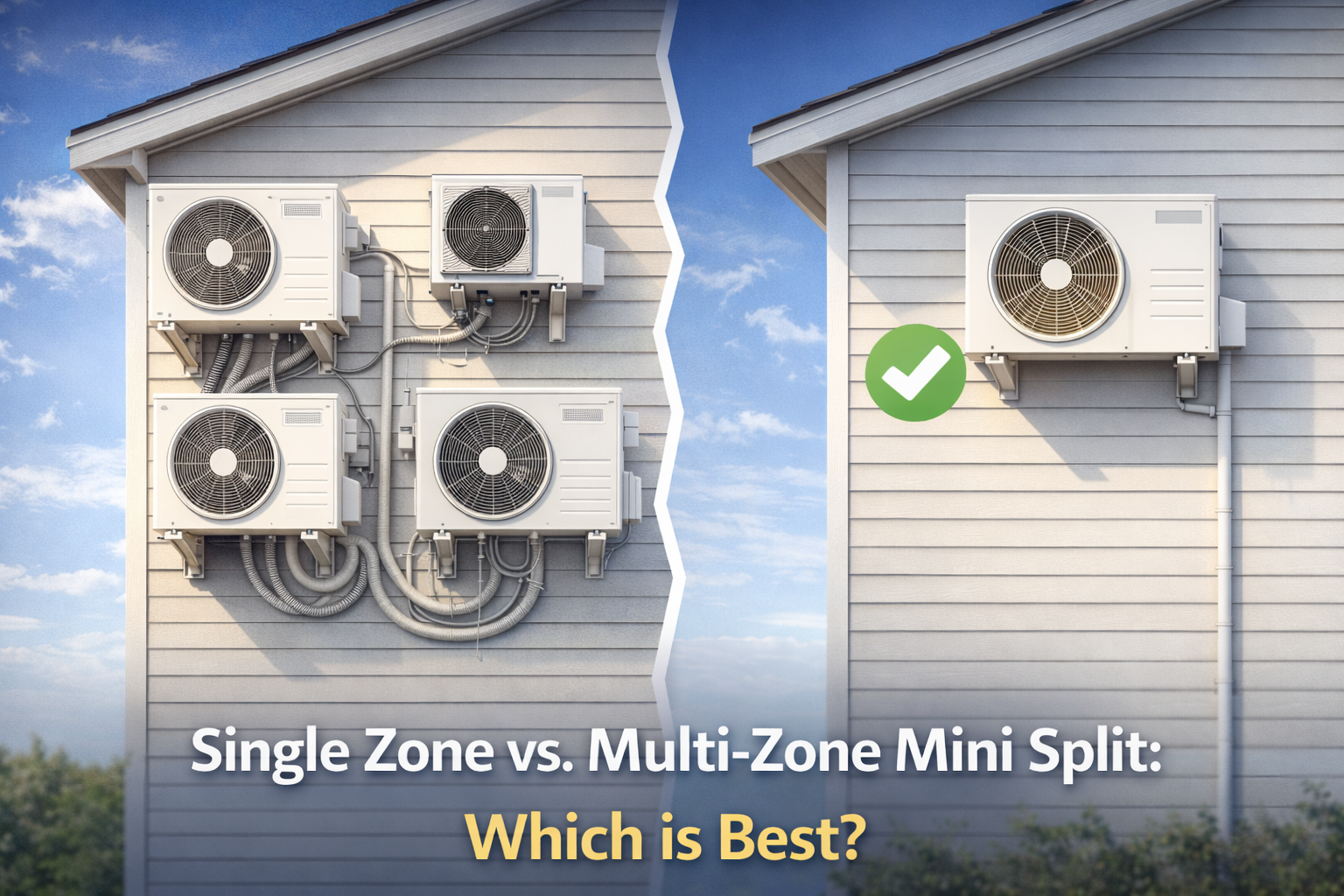
1. Single Zone Systems
- The Setup: 1 Outdoor Unit ➡️ 1 Indoor Head.
- Scenario: If you want to cool 3 bedrooms, you buy 3 completely separate systems. You will have 3 boxes sitting outside your house.
2. Multi-Zone Systems
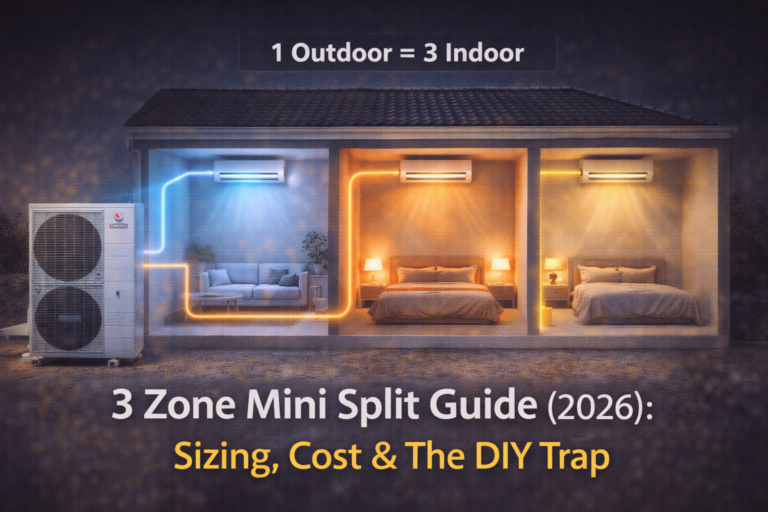
- The Setup: 1 Massive Outdoor Unit ➡️ 2, 3, 4, or 5 Indoor Heads.
- Scenario: You have one large compressor in the backyard, with copper lines running all over the house to feed the different rooms.
Round 1: The Cost 💰
Winner: Tie (Surprisingly).
You would think buying one machine is cheaper than buying three. Not always.
- Multi-Zone: The outdoor unit is huge and complex. Plus, running long linesets from the backyard to the front bedroom requires expensive extra piping and line-hiding covers.
- Single-Zone: While you buy more machines, they are mass-produced and cheap. Installing them “back-to-back” through the wall uses zero extra pipe.
Verdict: If the rooms are far apart, Single-Zones are often cheaper to install. If the rooms are clustered together, Multi-Zone wins.
Round 2: The “Redundancy” Risk ⚠️
Winner: Single Zone.
This is the biggest secret installers don’t tell you.
- The Multi-Zone Nightmare: If your one big outdoor compressor fails (blows a capacitor or leaks refrigerant), your entire house loses cooling. All 4 rooms go hot instantly.
- The Single-Zone Safety: If one unit breaks, the other 3 keep running perfectly. You are never left completely without AC.
👉 Read this essential guide first
Round 3: Aesthetics (The “Porcupine” Effect) 🎨
Winner: Multi-Zone.
- Single-Zone: Do you really want 4 separate condenser boxes lining the side of your house? It can look cluttered (like a “porcupine”).
- Multi-Zone: You have one clean, quiet unit tucked away in the back. It looks much more professional and preserves your home’s curb appeal.
Round 4: Efficiency & Modulation 📉
Winner: It Depends.
Multi-zone units have a “Turn-Down Ratio.” Imagine you have a 36,000 BTU 4-zone system. If you only turn on one 9,000 BTU head in the bedroom at night, the massive outdoor unit might struggle to run at such a low speed. It might short-cycle.
Single zones are perfectly matched. A 9k outdoor unit runs a 9k indoor head with 100% optimized efficiency.
The Verdict: What Should You Buy?
Choose Multi-Zone if:
- Aesthetics are #1: You have strict HOA rules or you hate the look of multiple boxes outside.
- Limited Ground Space: You live in a townhouse or have a tiny yard with room for only one unit.
- Rooms are Clustered: The bedrooms are all close to where the outdoor unit will sit.
Choose Single-Zone if:
- Budget is Tight: Buying DIY single zones (like MrCool) one by one spreads the cost.
- Safety is Key: You want backup. If one dies, you just move to the other room.
- Efficiency: You want the absolute highest SEER rating for each specific room.
Conclusion: Do The Math
Before you buy a massive 48k Multi-Zone system, make sure you actually need that much power. Oversizing a multi-zone system is a very expensive mistake.
- Step 1: Calculate the BTU needs for each room individually.
- Step 2: Add them up to find your total outdoor unit size.