Mini Split Sizing for Mobile Homes: A Guide for Manufactured Housing (2026)
If you live in a mobile or manufactured home, you know the struggle: Summer heat hits different.
One minute the sun comes out, and ten minutes later, your home feels like an oven. Why? because unlike traditional “stick-built” houses, mobile homes often have thinner walls (2×4 or even 2×3 studs), less attic insulation, and metal roofs that radiate heat downward.
Traditional central air systems for mobile homes are notoriously inefficient and expensive to repair. That is why so many owners are switching to ductless mini splits (especially MrCool DIY units).
But here is the catch: You cannot size a mobile home like a regular house. If you follow a standard BTU chart, you will end up sweating.
In this guide, I will show you how to size your system correctly to combat the “mobile home heat load.”
🏠 Quick Fix: Don’t want to do the math? Use our Free Mini Split Calculator. Important: Make sure to select “Poor / Mobile Home” in the Insulation dropdown to get an accurate reading.
Why Mobile Homes Need More Power?
Standard HVAC rules assume R-13 or R-19 wall insulation. Many older mobile homes have R-7 or R-11 at best. This means heat enters your home much faster.
When sizing a mini split for a single-wide or double-wide, we typically use a “Load Factor” of 30-35 BTUs per square foot (compared to the standard 20-25).
Start here 👉 Looking for a clear, no-nonsense explanation of mini splits?
The “Wall Strength” Issue
Before we talk about BTUs, we need to talk about weight. Mobile home walls are often not strong enough to hold a 30-lb indoor air handler on the drywall alone.
- Pro Tip: When installing the indoor unit, always find the studs, or mount a piece of plywood across two studs first to distribute the weight.
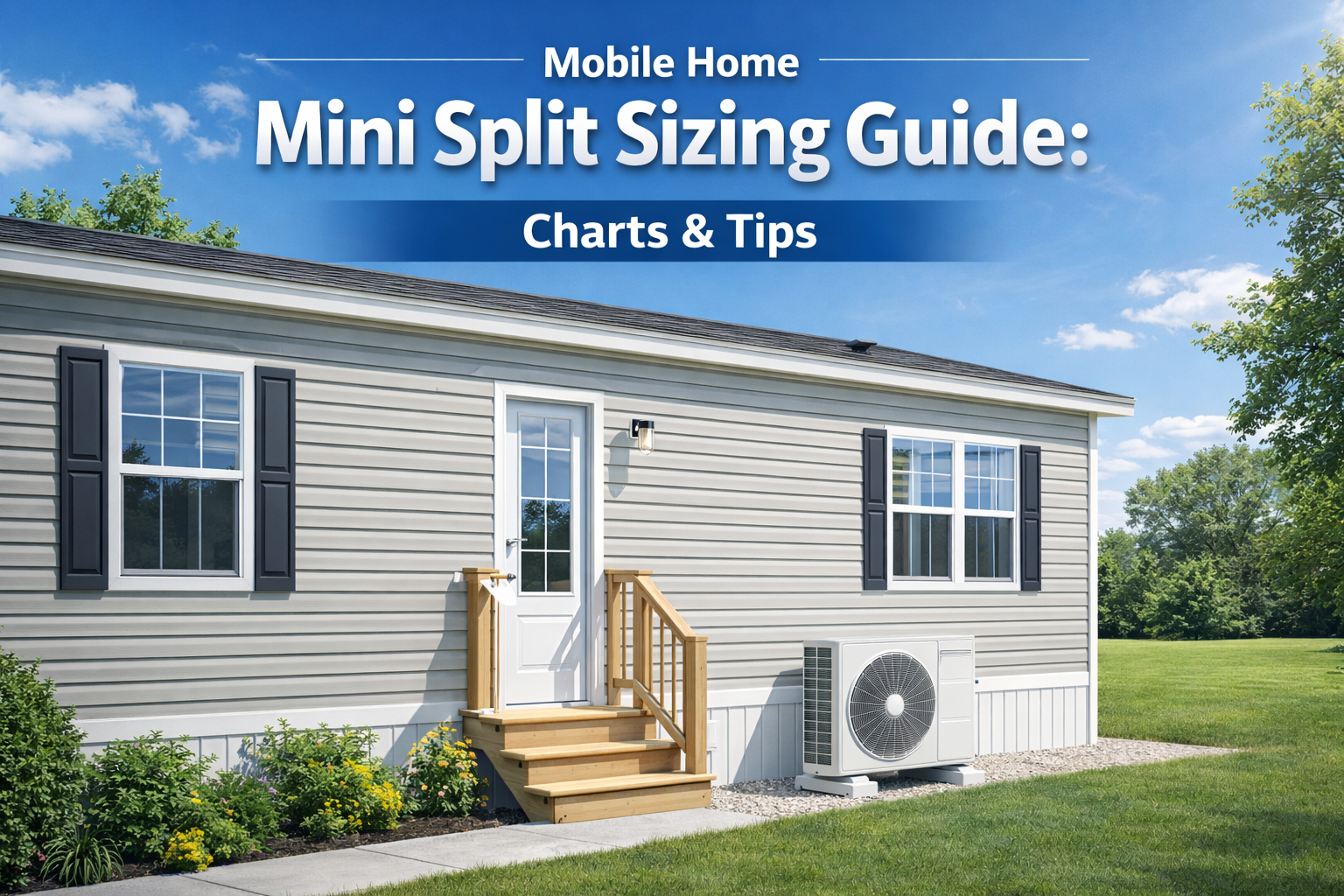
- For the Outdoor Unit: Do NOT mount the compressor bracket to the side of a mobile home. The vibration will shake the whole house. Instead, use a Ground Stand or a concrete pad.
Mobile Home Mini Split Sizing Chart (2026)
Here is the adjusted sizing chart specifically for manufactured homes with average-to-poor insulation:
| Room / Zone | Square Footage | Recommended Size |
| Master Bedroom | 120 – 200 sq. ft. | 9,000 BTU |
| Living Room (Single Wide) | 300 – 450 sq. ft. | 12,000 BTU |
| Main Area (Double Wide) | 500 – 700 sq. ft. | 18,000 BTU |
| Whole Single-Wide | 800 – 1,000 sq. ft. | 24k or 36k Multi-Zone |
(Note: If you are in a humid climate like Florida, oversizing too much can cause humidity issues. Try to stick close to these numbers.)
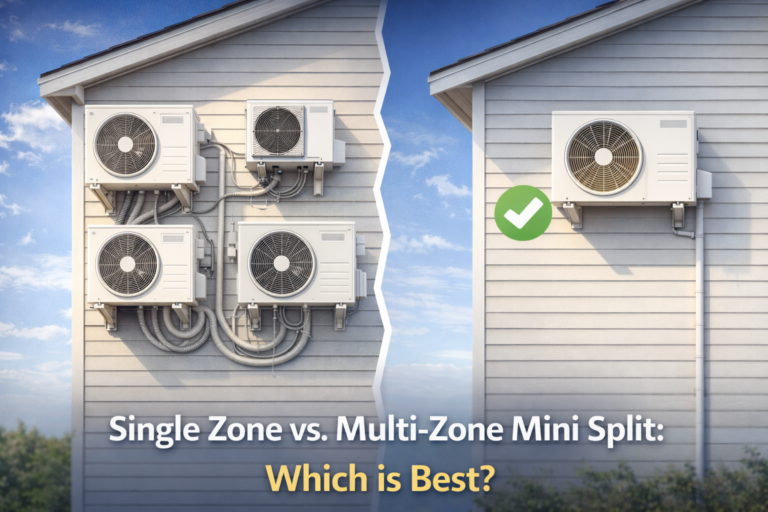
Single-Zone vs. Multi-Zone for Mobile Homes
Should you get one big unit for the whole house or multiple small ones?
Option 1: The “Hallway Strategy” (Single Zone)
Many owners install one big 24,000 BTU unit in the main living area and aim the airflow down the hallway.
- Pros: Cheapest option ($1,500 – $2,000).
- Cons: The bedrooms at the end of the hall will stay warm. You might need small fans to push the air.
Option 2: The Multi-Zone (Best Comfort)
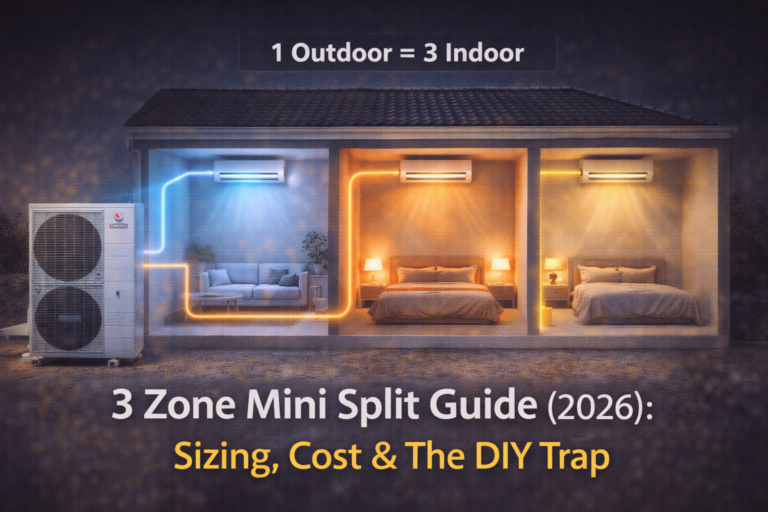
A 2-Zone or 3-Zone system allows you to put a head in the living room and one in the master bedroom.
- Pros: Perfect temperature everywhere.
- Cons: Harder to install under a mobile home (running lines in the crawlspace requires protection against rodents).
Dealing with the “Crawlspace”
If you are installing a DIY system like MrCool, you will likely need to run the line set (pipes) under the home in the crawlspace. Critical Advice: Never leave the line set insulation exposed. Mice and raccoons love to chew on the white foam insulation. Wrap the lines in protective tape or run them through a PVC pipe for protection.
Looking to cool your workshop too? Read our dedicated guide on How to Size a Mini Split for a Garage.
Conclusion: Don’t Underestimate the Heat
Sizing a mini split for a mobile home is all about defense. You are defending against thin walls and hot roofs. It is always safer to go slightly higher in BTUs than you would for a brick house.
Ready to see exactly what you need?
👉 Click Here to use the Mini Split Calculator Select “Poor Insulation” to see the adjusted numbers for your specific room size.