Mitsubishi Mini Split Condensate Pump Guide
(Installation & Troubleshooting)
Water leaks from a Mitsubishi mini split are rarely caused by refrigerant issues or mechanical failures.
In most cases, the real problem is improper condensate drainage. As an HVAC engineer, I can tell you that gravity isn’t always enough to clear the water.
When a standard gravity drain is physically impossible due to your home’s layout, a condensate pump is your only line of defense against severe water damage. In this guide, we will break down exactly how these pumps work, how to install them correctly, and how to troubleshoot the most common drainage failures in Mitsubishi systems.
What Is a Condensate Pump in a Mini Split System?
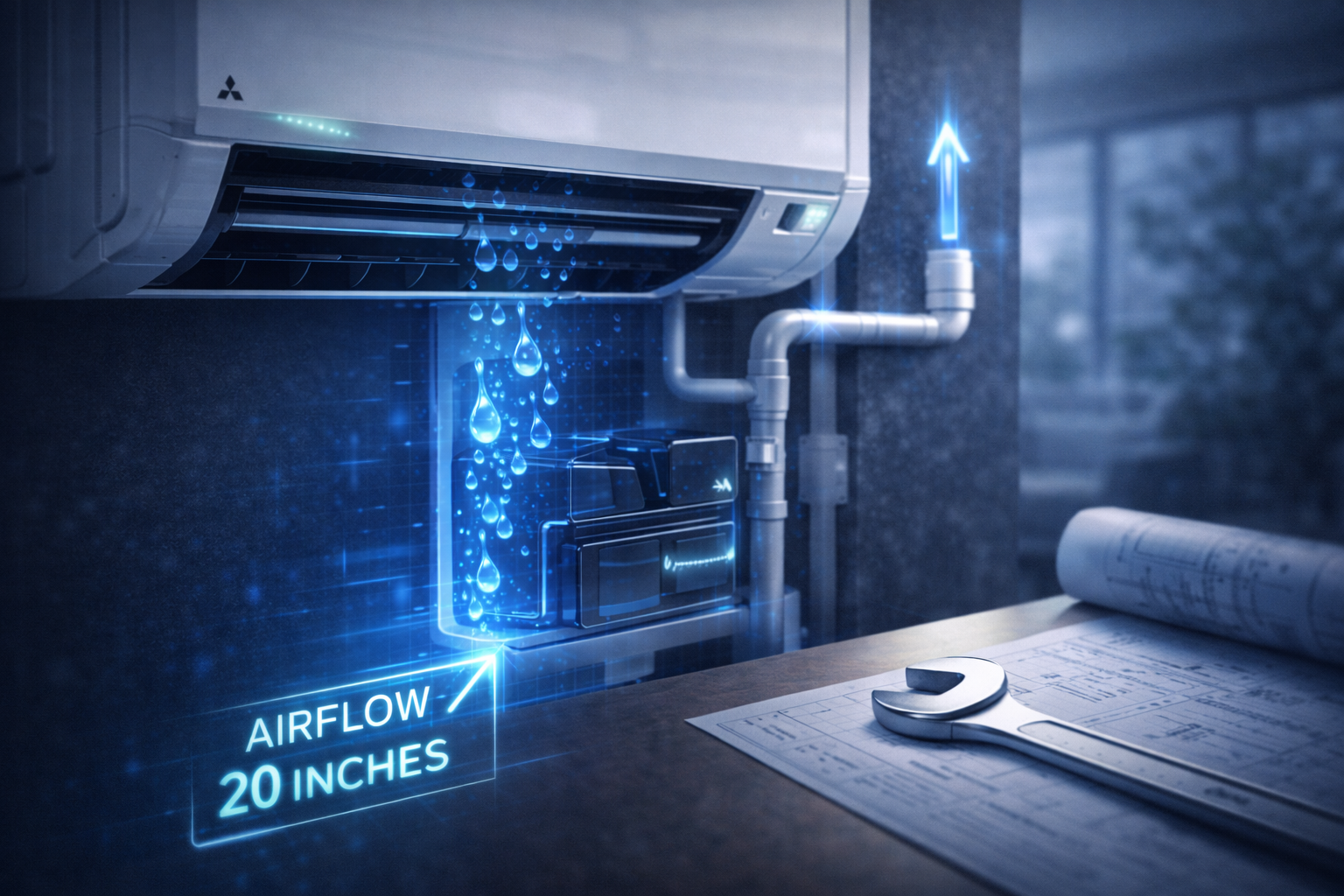
During the cooling process, the indoor evaporator coil removes moisture from the humid air. This water drips into a drain pan. Normally, a PVC or flexible tube carries this water outside using a continuous downward slope (a gravity drain).
A condensate pump is a small, motorized device that actively pushes this water up and out when gravity cannot do the job.
Experiencing water dripping down your walls right now? Check our emergency troubleshooting guide: Why is my mini split leaking water?
When Does a Mitsubishi Mini Split Need a Condensate Pump?
You should avoid using a pump if possible (since it introduces a moving part that can fail), but it becomes absolutely mandatory in these three engineering scenarios:
- Basement Installations: If the indoor unit is mounted on a basement wall that is below the exterior ground level, the water must be pumped upward to exit the house. (Read our Basement Mini Split Guide).
- No Downward Slope: If the line set has to go up into an attic or across a flat interior ceiling before reaching an exterior wall.
- Long Distance Runs: If the drain line has to travel an exceptionally long horizontal distance where maintaining a 1/4-inch per foot slope is impossible.
Types of Condensate Pumps Used With Mitsubishi Mini Splits
Mini Pump (Concealed)
Extremely compact. It is split into two parts: a tiny reservoir/sensor that sits inside the mini split’s drain pan, and the actual pump motor which is hidden inside the plastic line set cover or the ceiling.
Pros: Invisible aesthetics. Cons: Harder to service.
Reservoir Pump (External)
A larger, all-in-one box usually mounted directly below the indoor unit or near the floor. The water drains into it via gravity, and once the internal float rises, it pumps the water away.
Pros: Easy to clean and replace. Cons: Visually bulky on the wall.
Best Condensate Pumps for Mitsubishi Mini Splits
Not all pumps are created equal. Here is our engineering breakdown of the most reliable models used in the field:
| Pump Brand & Model | Max Lift Height | Noise Level | Best Use Case |
|---|---|---|---|
| Aspen Mini Aqua | 33 ft. | 21 dB(A) (Very Quiet) | Concealed inside line set covers |
| Sauermann Si-30 | 33 ft. | 20 dB(A) | Tight spaces & quiet bedrooms |
| Little Giant (External) | 20 ft. | Moderate | Basements where aesthetics don’t matter |
How to Install a Condensate Pump (Step-by-Step)
Installing a mini pump requires moderate electrical and plumbing skills. Here is the standard protocol:
- Turn Off Power: Completely disconnect power to the Mitsubishi system at the main breaker.
- Connect the Drain Line: Attach the flexible vinyl tube from the mini split’s drain pan to the pump’s reservoir inlet. Ensure the connection is tight with a zip tie.
- Mount the Pump Securely: If using a concealed pump, mount the motor assembly vertically inside the line set cover. Always use anti-vibration mounts to prevent buzzing noises against the wall.
- Connect Electrical Wiring: The pump will typically wire into the indoor unit’s power supply (L1/L2). Crucial step: Wire the pump’s safety switch into the mini split’s communication wire so the AC shuts off automatically if the pump fails, preventing a flood.
- Test Operation: Slowly pour a water bottle into the indoor unit’s coils. Watch the water enter the reservoir, lift the float, and verify the pump ejects the water outside.
Case Study: Basement Mitsubishi Installation
The Scenario: A homeowner converted their basement into a home theater and installed a Mitsubishi MSZ-GL. However, the indoor unit was mounted 2 feet below the exterior ground level, making a gravity drain impossible.
The Mistake: The original installer attempted to run the drain line upward without a pump, resulting in water backing up into the unit and ruining the drywall. (A classic installation mistake).
The Engineering Fix:
We retrofitted an Aspen Mini Aqua pump inside the line set cover and wired the safety switch to the Mitsubishi control board. The water is now successfully pushed 6 feet upward and out of the house. Result: Zero leaks for 3 years.
Common Condensate Pump Problems
- Pump Not Turning On: Usually caused by a jammed float switch. Dirt or bio-slime builds up in the reservoir, sticking the float down so the pump never knows it’s full.
- Water Leaking from Indoor Unit: If the pump fails, the water backs up. If your safety switch isn’t wired correctly, the Mitsubishi unit will continue creating condensation until it overflows the pan.
- Loud Buzzing Noise: The pump is either vibrating against the wall (needs rubber isolation) or the reservoir is dry and it is sucking air.
- Pump Running Continuously: The discharge line may be kinked or blocked, or the check valve is broken, causing water to fall back into the reservoir after being pumped up.
If your pump’s safety switch trips the system, your indoor unit will display a specific flashing sequence. Decode it using our Mitsubishi Error Codes List.
How to Maintain a Condensate Pump
Pumps fail primarily due to a lack of maintenance, not mechanical defect. To ensure longevity:
- Clean the Reservoir: Once a year, disconnect the small reservoir block, open it, and wipe away the slime (biofilm) that accumulates inside.
- Inspect the Tubing: Look for kinks or black mold buildup inside the clear vinyl tubing.
- Check the Float: Ensure the internal float moves up and down freely without friction.
Incorporate this into your routine: How to Deep Clean a Mini Split.
Do Mitsubishi Mini Splits Include a Built-in Pump?
It depends on the style of the indoor unit.
Standard wall-mounted units (like the MSZ series) do not come with built-in pumps. They rely on gravity.
However, Ceiling Cassette units (like the MLZ EZ FIT series) do include a built-in factory condensate pump because they must pump water up and out of the ceiling joists.
Learn more: Ceiling Cassette Mini Split Guide.
Does a Condensate Pump Affect Warranty?
Installing a third-party condensate pump (like Aspen or Sauermann) does not automatically void your Mitsubishi warranty. However, if the pump is wired incorrectly and fries the indoor PC board, or if the safety switch is bypassed and a flood damages the unit, Mitsubishi will not cover the damages under warranty.
Read the fine print: Mitsubishi Warranty Explained.
Frequently Asked Questions
Do Mitsubishi mini splits need a condensate pump?
Not always. Wall-mounted units only require a pump if a standard downward gravity drain is impossible (e.g., basement installations or lines running up into an attic). Ceiling cassette units usually have them built-in.
Why is my mini split leaking water inside?
Water leaking inside is almost always a drainage issue. If you have a pump, the float switch may be stuck or the pump motor has failed. If you don’t have a pump, the gravity drain line is likely clogged with algae or dirt.
Can I install a condensate pump myself?
While physically mounting the pump is simple, wiring the power and the safety shut-off switch into the Mitsubishi control board requires electrical knowledge. Improper wiring can void your warranty or fry the system.
How high can a condensate pump lift water?
High-quality mini split condensate pumps (like the Aspen Mini Aqua) can typically lift water vertically up to 33 feet (10 meters), which is more than enough for residential applications.
Are mini split condensate pumps noisy?
Modern mini pumps are very quiet, usually operating around 20-21 dB(A). However, if they are mounted directly against drywall without rubber vibration dampeners, they can cause an annoying buzzing sound when activated.