How to Find the Age of a Mitsubishi Mini Split
(Serial Number Guide)
Before replacing a Mitsubishi mini split, the first thing I check as an HVAC engineer is the manufacturing date.
Many homeowners spend thousands replacing systems that are actually still well within their expected lifespan or protected under an active warranty.
If you moved into a house with an existing Mitsubishi ductless system, or you simply lost your original installation paperwork, you need to know exactly how old your unit is. In this guide, I will show you exactly where to find the hidden serial number, how to decode the manufacturing year, and how to decide if your system is worth repairing.
Where to Find the Serial Number on a Mitsubishi Mini Split
Mitsubishi places their data plates in specific, standardized locations. You will need to check both the indoor and outdoor units, as they are manufactured separately and may have slightly different dates.
Indoor Unit Location
- Side Label: Look on the bottom right-hand side of the plastic casing.
- Behind the Front Panel: Lift the front plastic cover (where you access the filters). There is often a silver or white sticker on the right side near the electrical control box.
Outdoor Unit Location
- Side Panel Sticker: Look on the right side of the metal casing, directly above where the copper refrigerant lines connect to the brass valves.
- Back Panel: Occasionally located near the top right corner on the back side of the unit.
How to Read a Mitsubishi Serial Number
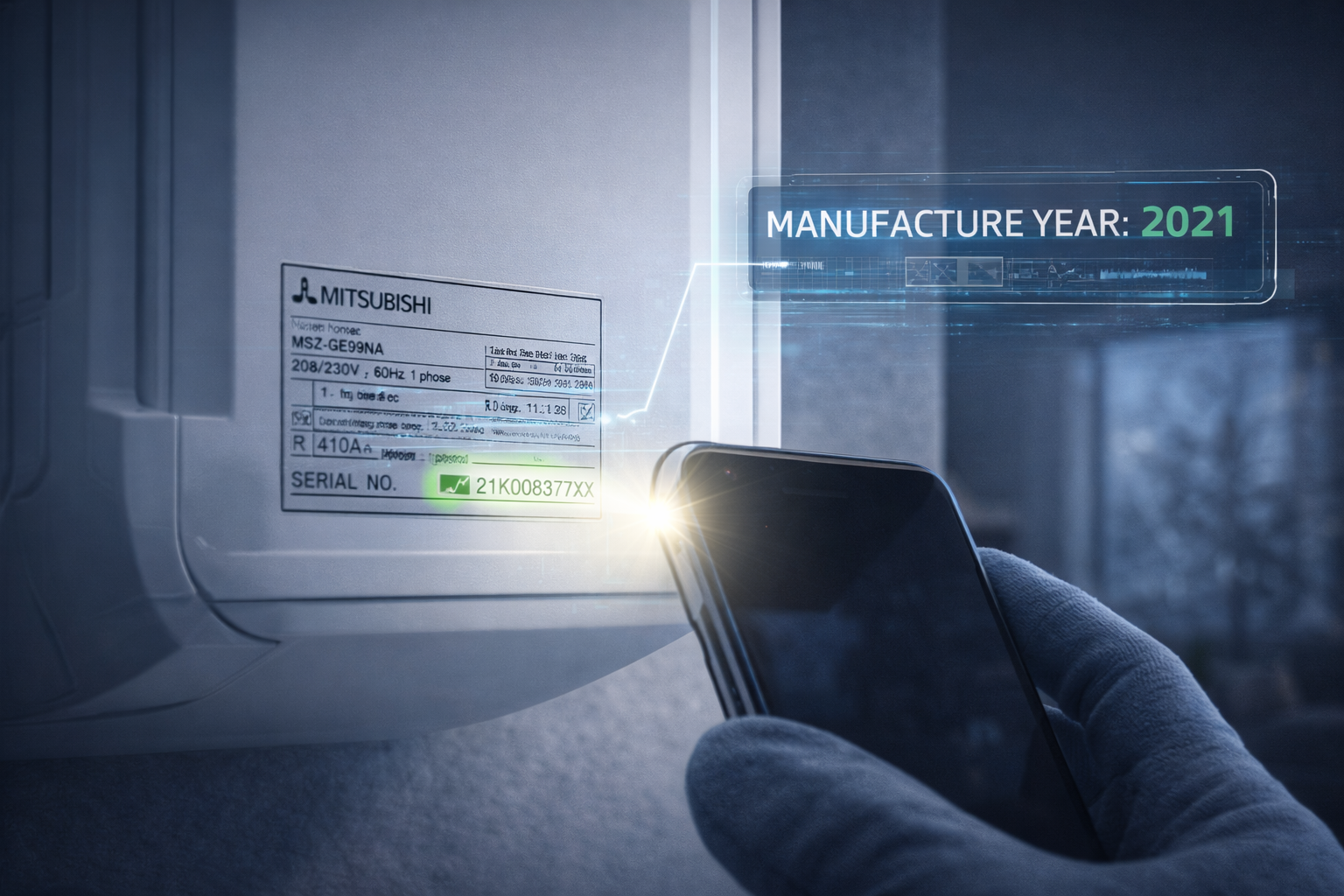
Mitsubishi serial numbers are typically 7 digits long (sometimes alphanumeric). Unlike some American brands that use complex alphabet codes, Mitsubishi’s modern serial numbers are relatively straightforward.
- First Digit(s): Usually indicates the year of manufacture.
- Second Digit: Indicates the month or the specific production batch.
- Remaining Digits: The unique sequential production number of that specific unit.
Warning: Older models (pre-2010) or units manufactured in different global facilities may use a different sequence. Always consult a Diamond Contractor if the code looks unusual.
Mitsubishi Manufacturing Date Chart (Example Table)
For many units produced in the last decade, you can quickly estimate the age by looking at the first two digits of the serial number prefix:
| Serial Prefix | Manufacture Year |
|---|---|
| 19xxxx | 2019 |
| 20xxxx | 2020 |
| 21xxxx | 2021 |
| 22xxxx | 2022 |
Always verify your exact age by entering your serial number into the official Mitsubishi Comfort portal or contacting customer support.
How Long Do Mitsubishi Mini Splits Last?
If you discover your unit is 10 years old, don’t panic. You are likely only halfway through its life.
- Average Lifespan: 15 to 20 years with proper maintenance.
- Hyper-Heat Durability: Mitsubishi’s premium H2i models feature heavy-duty compressors designed to survive brutal winters, often outlasting standard units.
- Rental Usage Impact: Units in rental properties tend to age faster due to tenant abuse and lack of filter cleaning. See our Mitsubishi Warranty Guide to see how long your parts are actually covered.
Case Study: 9-Year-Old Mitsubishi With Heating Issues
The Complaint: A homeowner called because their system was blowing cold air in heat mode. Another contractor told them to replace the entire system because “it’s old.”
The Diagnosis: I checked the serial number. The unit was exactly 9 years old. Unfortunately, it was never registered, so the warranty had expired at year 5. We had to do a strict “repair vs. replace” analysis.
The Outcome:
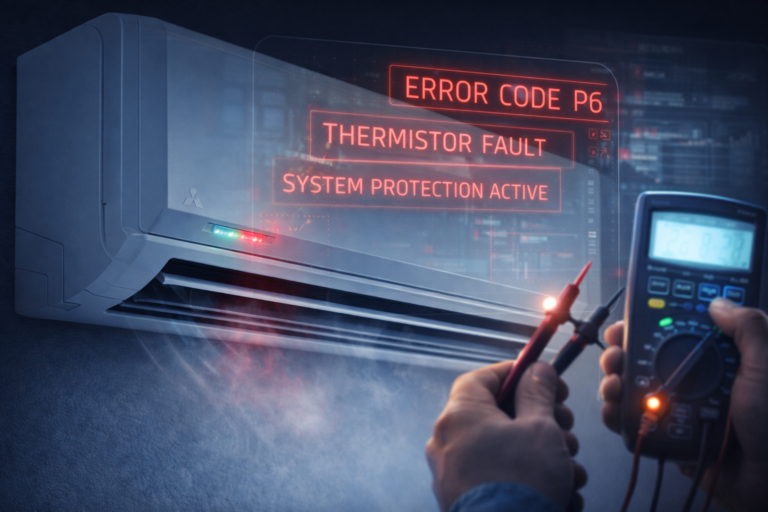
We found a faulty thermistor and a heavily clogged blower wheel. We performed a deep clean and replaced the $45 sensor. Total repair cost: $350. By choosing to repair a 9-year-old Mitsubishi, the homeowner saved over $3,200 compared to a new installation cost, and the unit will easily run for another 6+ years.
When Should You Replace Instead of Repair?
Once you know the age of your system, use this engineering framework to make your financial decision:
Does Age Affect Energy Efficiency?
Yes. A 12-year-old Mitsubishi mini split that was rated at 20 SEER when it was brand new is likely operating closer to 15 SEER today. Why?
- Coil Degradation: Micro-corrosion on the outdoor aluminum fins reduces their ability to transfer heat.
- Refrigerant Tolerance: Even microscopic, slow leaks over a decade will lower the refrigerant charge, forcing the compressor to work harder.
- Inverter Board Wear: Older capacitors become less efficient at modulating power.
Wondering how much your old unit is costing you? Read: Does a mini split use a lot of electricity?
How Age Impacts Warranty Coverage
Knowing your serial number is the only way to claim free replacement parts. Remember:
- Registration Matters: If it wasn’t registered within 90 days of installation, the warranty likely expired at 5 years.
- Diamond Contractor: If installed by a certified Diamond Contractor and properly registered, your parts and compressor are covered for 12 years from the date of installation.
Read our full Mitsubishi Warranty Guide to understand your exact coverage.
Frequently Asked Questions
How do I tell how old my Mitsubishi mini split is?
Locate the data sticker on the side of the indoor or outdoor unit and find the serial number. For many modern units, the first two digits of the serial number indicate the year of manufacture (e.g., “21” means 2021).
How long does a Mitsubishi mini split last?
With proper installation, annual cleaning, and surge protection, a Mitsubishi mini split typically lasts 15 to 20 years. They are widely considered the most durable ductless systems on the market.
Where is the serial number located?
On the indoor wall unit, it is usually on a sticker on the bottom right side or hidden under the front plastic filter cover. On the outdoor condenser, it is on the right side panel near the copper refrigerant valve connections.
Is a 10-year-old Mitsubishi worth repairing?
Yes, in most cases. If the repair is a minor sensor, fan motor, or PC board, repairing it is much cheaper than replacing the system. However, if the compressor has completely failed, it may be time to replace the unit.
Does the Mitsubishi warranty transfer to a new owner?
If you sell your home, the extended 10 or 12-year warranties usually do not transfer. The warranty typically reverts to the base 5-year parts and 7-year compressor warranty, calculated from the original date of installation.