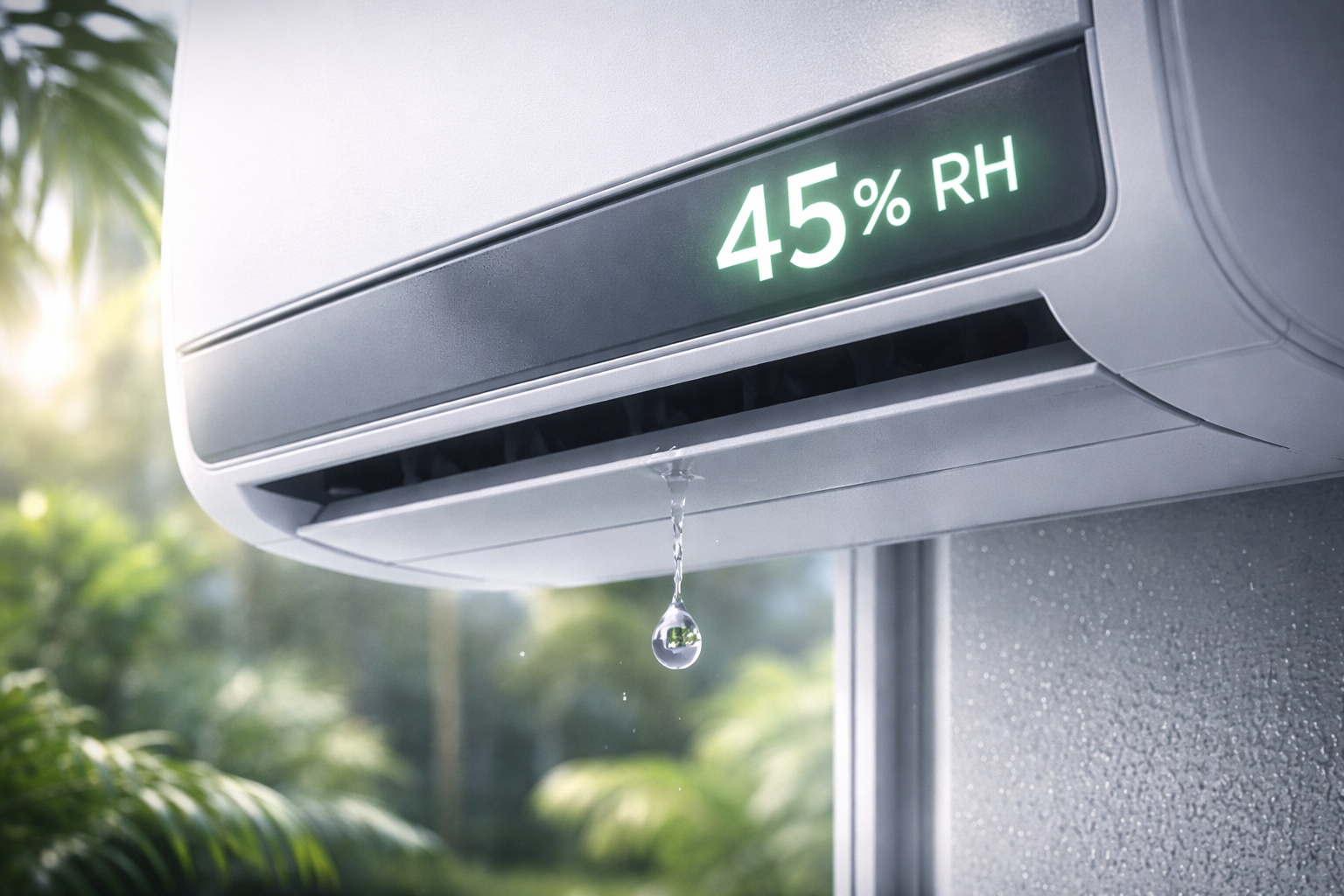
Do You Need a Bigger Mini Split in High Humidity? (The 2026 Truth)
High Humidity Sizing:
Bigger is NOT Better
Thinking about “sizing up” because of Florida or Louisiana humidity? Stop. In the HVAC world, an oversized unit in a humid climate is a recipe for mold, clammy air, and mechanical failure.
The Science of “Sticky” Air
Humidity isn’t just a feeling; in HVAC terms, it’s called Latent Heat. Most people size units for Sensible Heat (the temperature on the wall). But if your unit is too big, it cools the air so fast that it never runs long enough to pull the water out. The result? A room that is 68°F but feels like a “Cold Swamp.”
Run a Humidity-Adjusted Load CalculationThe 3 Disasters of Oversizing in Humid Areas
Short Cycling
A big unit hits the target temp in 5 minutes and shuts off. To remove water, a mini split needs to run for at least 15-20 minutes continuously.
The Mold Factory
High humidity + Cold surfaces = Condensation. If the Relative Humidity (RH) stays above 60%, mold will start growing behind your furniture and inside the unit.
Wasted Efficiency
Mini splits are most efficient when they “cruise” at low speeds. An oversized unit constantly starting and stopping kills your SEER2 rating.
Understanding the “Total Load”
As an HVAC engineer, I use Manual J to calculate two types of loads. In dry areas like Phoenix, the load is 90% Sensible. In humid areas like Miami, the load can be 30% Latent.
Sensible Load (Temperature)
Heat from the sun, roof, and walls. Read Sizing Guide.
Latent Load (Moisture)
Water vapor from the air, breathing, and cooking. This requires a cold coil and time.
The Solution: Variable Speed
The “Inverter” is your best friend. Instead of buying a bigger unit, buy a high-quality inverter that can modulate down. It will run at 20% power for 2 hours, acting as a massive dehumidifier.
See the Best Inverter Brands →BTU Adjustments: Dry vs. Humid Climate
| Room Size | Dry Climate (AZ/NV) | Humid Climate (FL/GA) | Verdict |
|---|---|---|---|
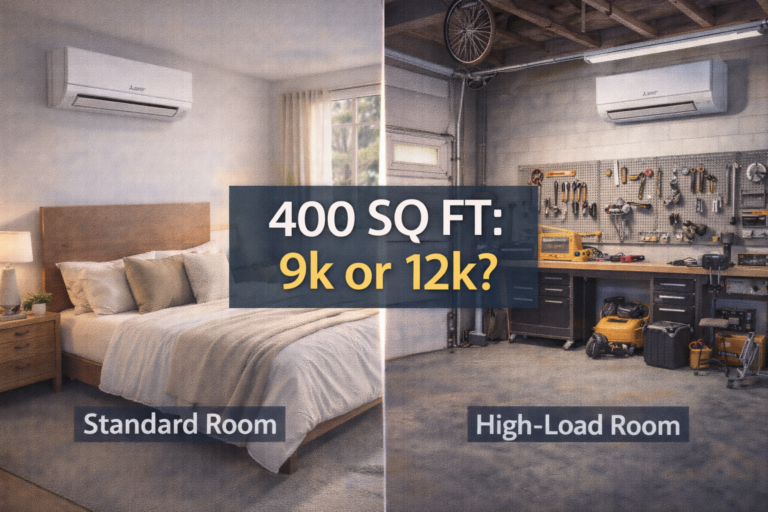
| 500 Sq Ft | 12,000 BTU | 9,000 – 12,000 BTU* | Smaller + Longer Run Time |
| 800 Sq Ft | 18,000 BTU | 15,000 – 18,000 BTU | Inverter mandatory |
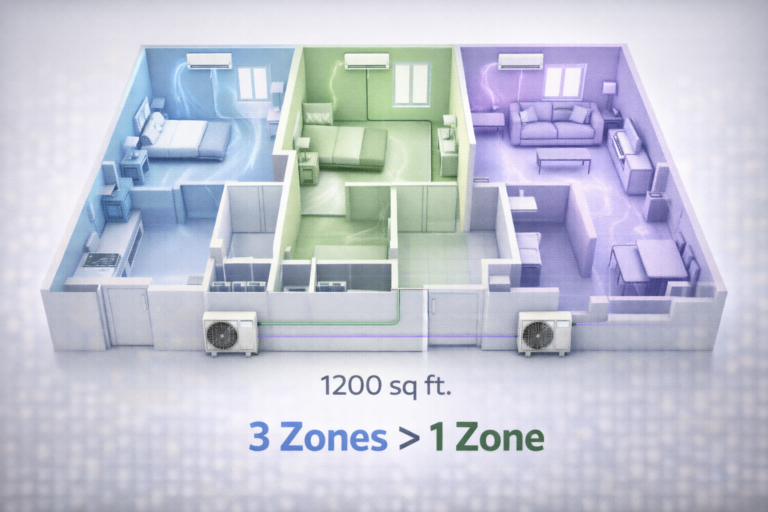
| 1200 Sq Ft | 30,000 BTU | 24,000 – 30,000 BTU | Multi-Zone preferred |
*Note: Do not “Size Up” for humidity. Size accurately and rely on Dry Mode.
Case Study: The New Orleans “Clammy” Condo
90% RH
Outdoor Humidity
The “Cold but Sticky” 600 Sq Ft Studio
The Problem: A homeowner in New Orleans installed a 18,000 BTU unit for his 600 sq ft ADU because he wanted “extra power” for the humidity.
The Result: The room hit 68°F in 10 minutes, but the humidity stayed at 75%. The bedding felt damp, and a musty smell appeared.
The Fix
We replaced the “Monster” 18k unit with a high-end 12,000 BTU Mitsubishi. We set it to 72°F. It ran longer, pulled out 3x more water, and the humidity dropped to 48%. Total comfort restored.
Top 3 Features for High-Humidity Mini Splits
Dry Mode (Dehumidification)
Slows the fan speed to make the coil colder, maximizing moisture removal. Learn how to use it.
Anti-Mold / Self-Clean
Runs the fan after shutdown to dry the internal coil. Essential for Florida homes.
FAQ: Humidity & Sizing
Why does my mini split make the room feel clammy?
This is almost always due to Oversizing. The unit is too powerful, so it cools the air temperature (Sensible heat) before it has a chance to remove the water vapor (Latent heat). Smaller is often better in humid areas.
Is “Dry Mode” the same as a dehumidifier?
Functionally, yes. In Dry Mode, the mini split focuses purely on moisture removal by keeping the coil icy cold and the fan speed at its lowest. It is very effective but can slightly overcool the room.
What happens if I don’t remove humidity?
Beyond discomfort, high humidity leads to mold growth inside your wall heads and on your drywall. It also causes your drain line to clog faster due to “algae slime” buildup.
Size for Comfort, Not Just Temp.
Don’t let a “Monster” unit ruin your air quality. Use our calculator to find the perfect BTU balance for your humidity levels.