Mini Split Sizing for Hot Climates
In Texas, Arizona, and Florida, standard sizing charts are a lie. If you don’t account for “High Ambient Derating” and “Latent Heat,” your system will fail when you need it most.
The “High Ambient” Reality
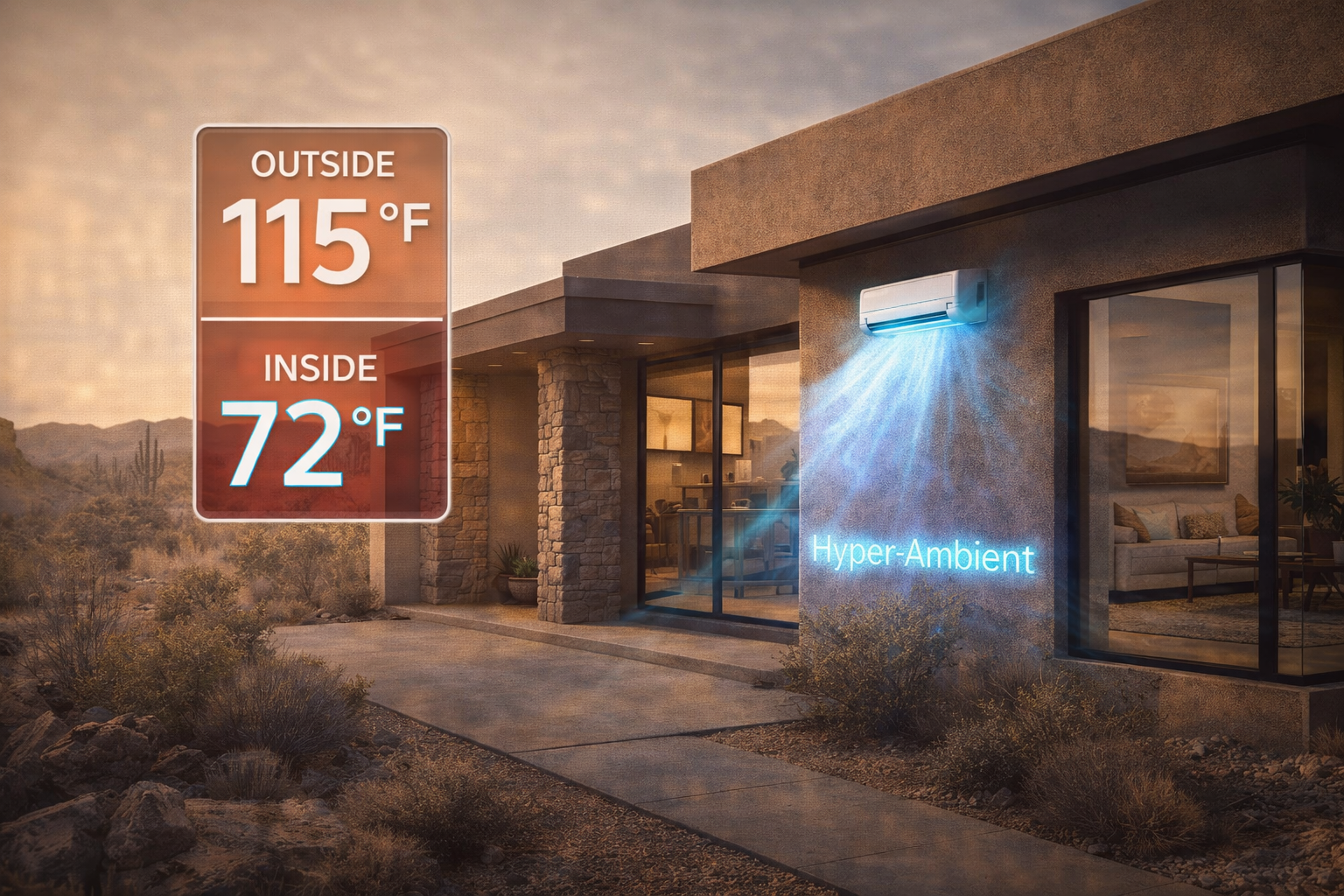
Listen closely: A standard 12,000 BTU unit is tested at 95°F. When the temperature in **Phoenix** or **Dallas** hits 110°F, that same unit might only deliver 9,500 BTUs. This is called Capacity Derating. If you size your unit based on a cool room, you will suffer in the summer inferno.
Calculate With Heat AdjustmentOne Heat, Three Different Wars
Arizona: The Oven
The Challenge: Extreme Sensible Heat. High ambient temps (115°F+) cause equipment to work at 70% efficiency.
Florida: The Swamp
The Challenge: Latent Heat (Humidity). Sizing too big creates mold. You need long run times.
Texas: The Hybrid
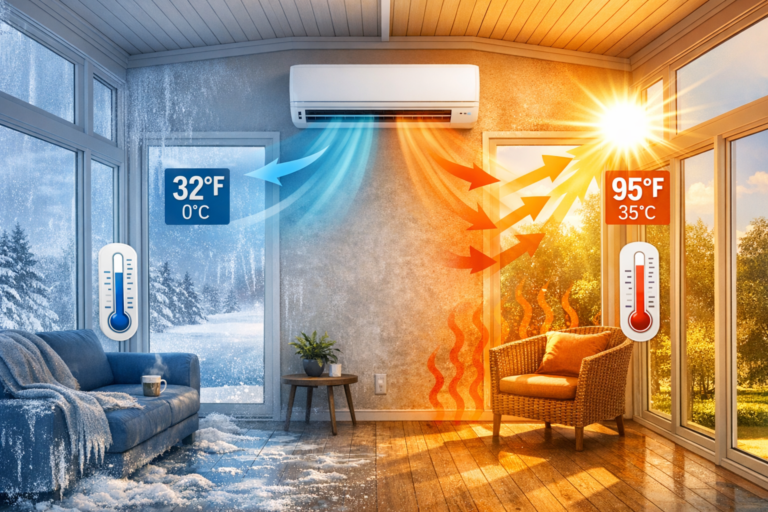
The Challenge: Rapid swings. 100°F days followed by freezing nights.
Sensible vs. Latent: The Invisible Enemy
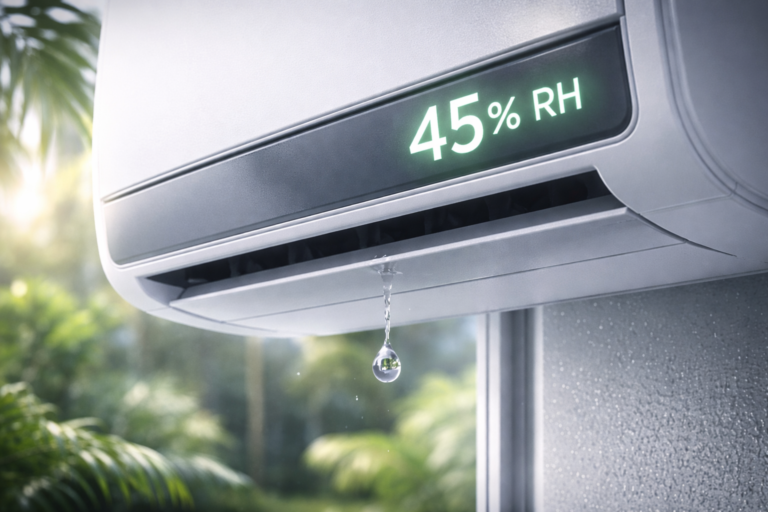
Most people only think about Sensible Heat (the temperature you read on a thermometer). But in hot, humid climates, Latent Heat (moisture) is just as important.
Sensible Cooling
Lowering the actual air temperature. Crucial for Arizona/Nevada.
Latent Cooling
Removing moisture. Crucial for Florida/Louisiana. If your AC is too big, it satisfy the temp too fast and leaves the water behind.
The Mold Trap
Installing an oversized 24k unit in an 800 sq ft Florida home is “Mechanical Suicide.” It will cool the room in 5 minutes, then shut off. The humidity will stay at 70%, and you will have mold growing on your walls in 3 months.
Why Humidity Kills Units →Capacity Derating Chart (Phoenix Design)
| Outdoor Temp | Nominal Capacity | Actual Delivery | Action Needed |
|---|---|---|---|
| 95°F (Standard) | 12,000 BTU | 12,000 BTU | None |
| 105°F | 12,000 BTU | 10,800 BTU | +10% Sizing Buffer |
| 115°F (Desert Peak) | 12,000 BTU | 9,200 BTU | Use 15k or 18k Unit |
*Data based on average inverter performance. High-end units like Mitsubishi derate less aggressively.
Case Study: The Phoenix Attic Conversion
The “Un-Coolable” 400 Sq Ft Room
The Project: A 400 sq ft bonus room above a garage in Phoenix, AZ.
The Fail: Homeowner installed a 9,000 BTU unit (based on standard charts). In July, the room never dropped below 85°F.
The Diagnosis: Between the garage floor heat, poor roof insulation, and 115°F ambient temp, the real load was 14,500 BTUs.
The Engineering Fix
We replaced it with a 15,000 BTU High-Ambient Inverter. The inverter ramps down during the morning but has the “brute force” to handle the 4 PM desert sun.
The “Hot Climate” Honor Roll
Mitsubishi Electric (FS Series)
Excellent high-ambient management. Their compressors are built for 20+ years of torture.
Read 18k Model Review →Gree Sapphire / Tosot
The world’s largest manufacturer. Their units are “Heavy” for a reason—larger coils for better heat exchange.
See OEM Brand Map →FAQ: Extreme Heat Sizing
Is 12,000 BTU enough for 500 sq ft in Florida?
If you have standard 8ft ceilings and good insulation: Yes. In Florida, you want to avoid going too big (like 18k) because you need the unit to run for long periods to pull moisture out of the air. If it shuts off too fast, you’ll have a humid “cold swamp.”
What is the best SEER2 for Texas?
Aim for 20 SEER2 or higher. In Texas, where the cooling season lasts 6+ months, a higher efficiency unit will pay for itself in less than 4 years. Plus, you can claim the $2,000 Federal Tax Credit.
Will my mini split stop working at 120°F?
Cheaper units may “trip” or overheat. Premium units (Mitsubishi, Daikin, LG) are rated to run up to 115°F or 122°F. However, expect a massive drop in BTU output at those temps.
Don’t Get Burned.
Buying a system for Texas or Arizona is an engineering project, not a shopping trip. Calculate your load first.