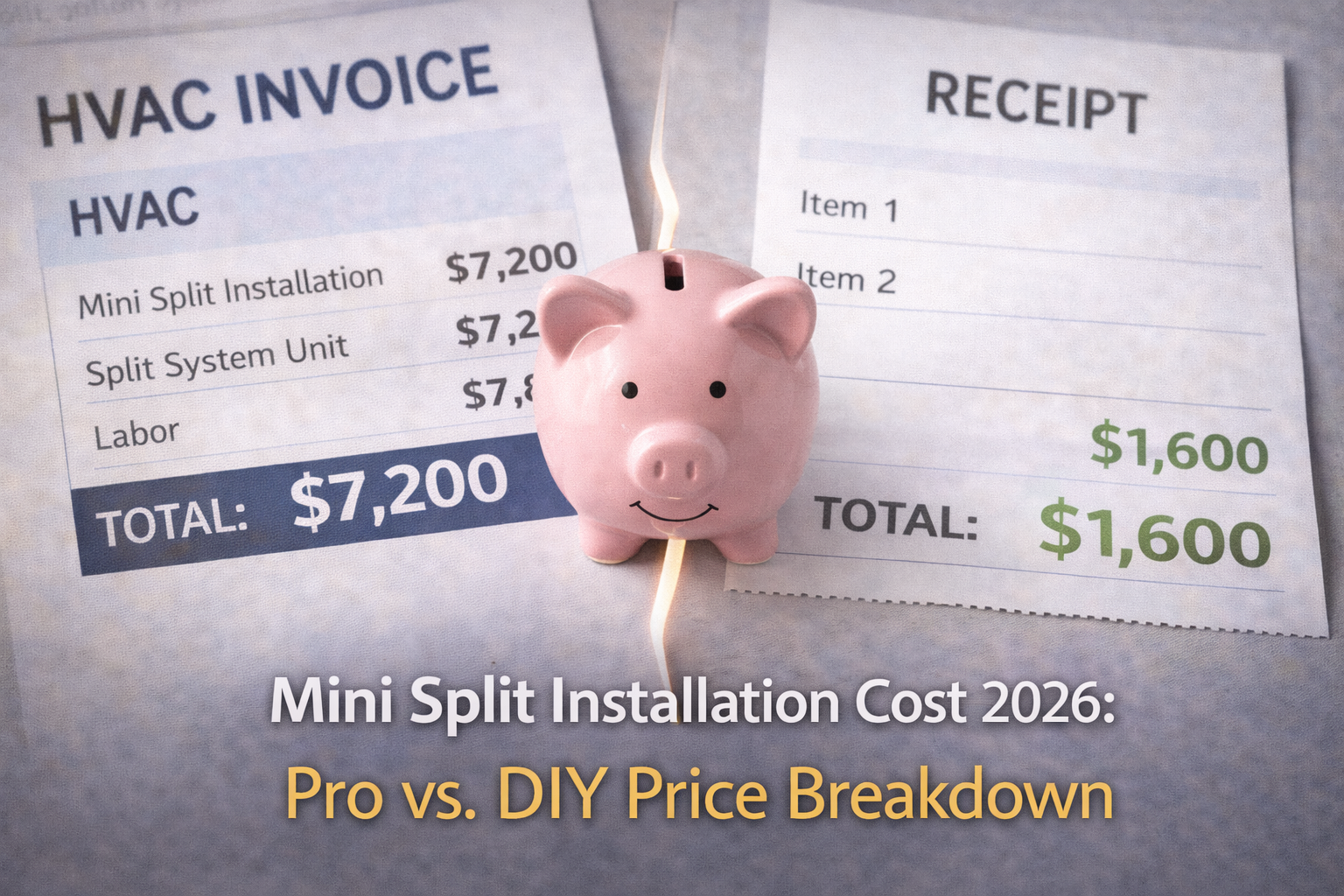
Mini Split Installation Cost 2026: Why Are Quotes So High? (Pro vs. DIY)
You decided to get a mini split. You called a local HVAC company for a quote. You were expecting maybe $2,000. The quote came back: $6,500.
You stared at the paper in shock. “Are they ripping me off?” The short answer is: Probably not. Inflation, skilled labor shortages, and equipment markups have driven prices to record highs in 2026.
In this breakdown, I will show you exactly where that money goes, and how you can save $4,000+ by taking a different path.
The Average Cost in 2026 💸
According to national averages, here is what you can expect to pay for a Single Zone (12k BTU) unit installed by a professional:
| Cost Factor | Low End | Average | High End |
| Equipment | $1,200 | $1,800 | $3,500 |
| Labor & Materials | $1,500 | $2,500 | $4,000 |
| Electrical | $300 | $600 | $1,200 |
| Total Project | $3,000 | $4,900 | $8,700 |
Yes, you read that right. The average is nearly $5,000 for one room.
Why Is Labor So Expensive? 👷♂️
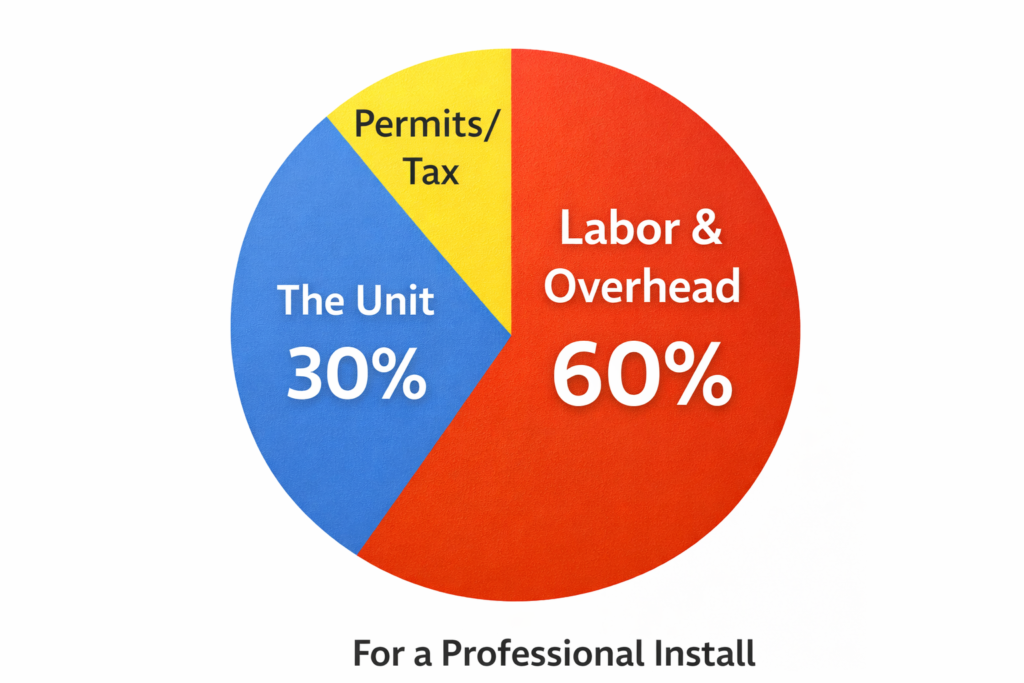
You aren’t just paying for the guy’s time. You are paying for:
- Specialized Tools: Vacuum pumps, gauges, nitrogen tanks ($2,000+ in gear).
- Insurance & Truck: Overhead costs for the business.
- Skill: Handling refrigerant requires an EPA license. It’s not a handyman job.
⚠️ Reality Check: Most HVAC companies charge $150 – $250 per hour for labor. A mini split install takes 4-8 hours. Do the math.
The “DIY” Loophole: Save $4,000 Instantly 📉
If you use a system designed for DIY (like MrCool DIY), you delete the “Labor” cost entirely.
Cost of a DIY Project:
- The Unit (12k BTU): ~$1,600 (Pre-charged lines).
- Electrical (Electrician): ~$400 (if you hire one just for the wire).
- Tools Needed: $0 (It comes with the kit).
- Total Cost: ~$2,000.
The Savings: You keep $3,000 to $5,000 in your pocket for a single Saturday of work.
Confused by BTUs, brands, or installation quotes
Hidden Costs Nobody Tells You About 🕵️♀️
Whether you hire a pro or do it yourself, watch out for these extras:
- The Pad/Stand ($50 – $150): You can’t put the outdoor unit on the dirt. You need a concrete pad or a wall bracket.
- Line Set Covers ($60): To hide the ugly white pipes running down your wall.
- Electrical Permit ($50 – $200): Your city might require a permit.
Conclusion: Which Path to Choose?
- Pay the Pro ($5k+): If you want zero hassle, have a complex multi-zone setup, or want a brand like Mitsubishi/Daikin.
- Go DIY ($1.5k+): If you are handy, want to save massive money, and just need to cool a garage, bedroom, or bonus room.
Still asking about the Tax Credit?
Remember, you get 30% back on both routes!
👉 Read our Guide: How to Claim the $2,000 Tax Credit