Best Mitsubishi Mini Split Models
(Engineer’s Top Picks 2026)
Mitsubishi doesn’t make “cheap” mini splits — and that’s exactly why choosing the right model matters.
As an HVAC engineer, I don’t recommend models based on marketing brochures or “bestseller” tags. I look at compressor design, low-ambient heating performance, and long-term hardware reliability.
If you are paying the premium for a Mitsubishi system in 2026, you need to ensure you are buying the right tier for your specific climate and home layout. An ultra-expensive Hyper-Heating unit is a waste of money in Florida, just as a standard unit is a freezing disaster in Maine. Let’s break down the best models by actual engineering use-cases.
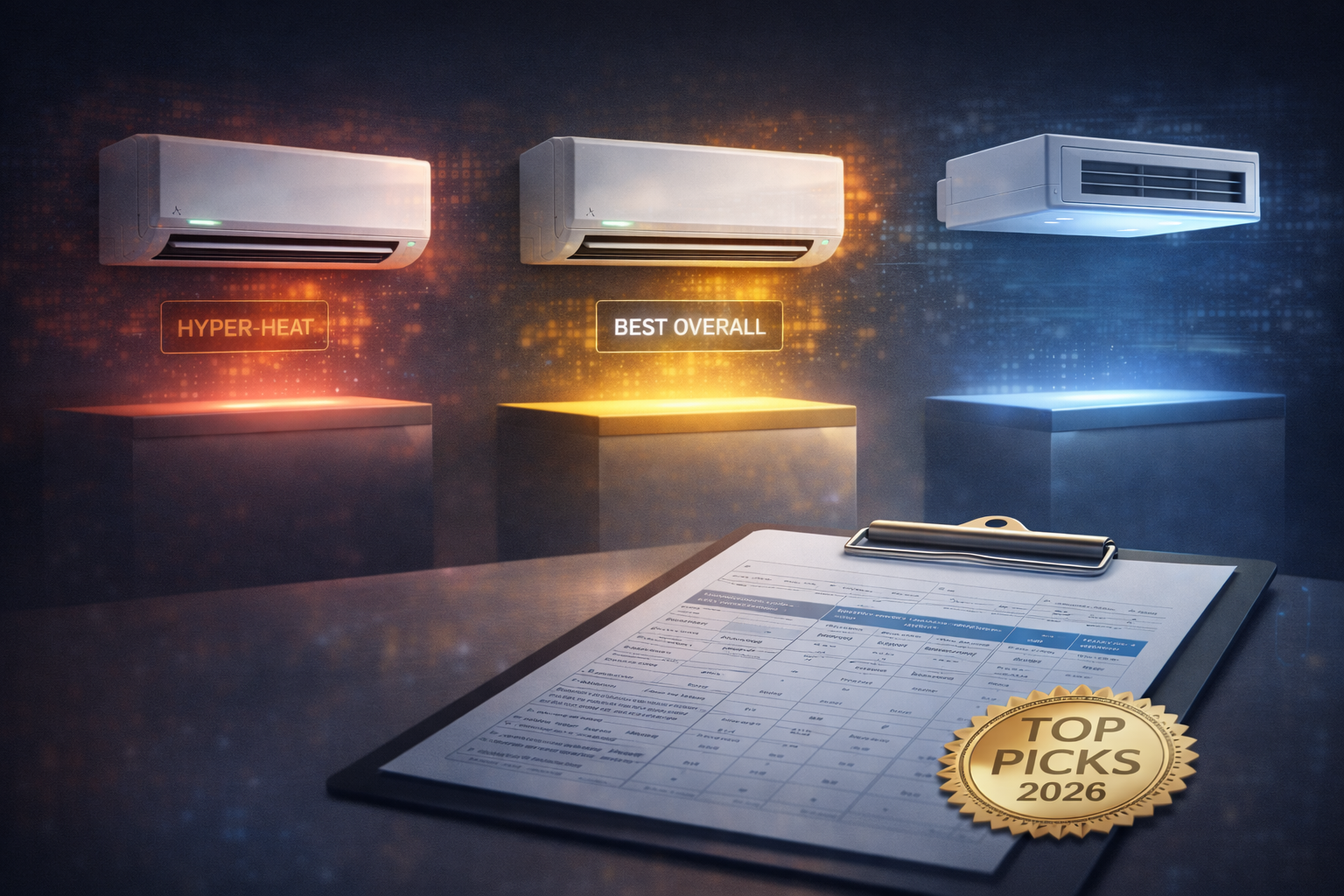
Quick Comparison Table (2026 Lineup)
Here is a high-level overview of the most reliable architectures in the current Mitsubishi catalog:
| Model Series | Best For | Max SEER2 | Heating Limit | The Verdict |
|---|---|---|---|---|
| MSZ-FS / GL Series | Everyday & Primary Residences | Up to 33.1 | Standard (5°F) | The best overall balance of price and supreme efficiency. |
| Hyper-Heat (H2i) | Northern / Freezing Climates | Up to 28.5 | -13°F to -22°F | The undisputed king of winter heating. |
| MLZ Ceiling Cassette | Luxury Homes / Aesthetics | Up to 21.4 | Standard (5°F) | Sits flush between joists; nearly invisible. |
| MXZ Multi-Zone | Whole-Home Solutions | Varies | Available in H2i | One compressor runs up to 8 indoor heads. |
🥇 Best Overall – Mitsubishi MSZ-FS / GL Series
The MSZ-GL (and its modern successor, the FS series) is the bread-and-butter workhorse of the Mitsubishi fleet. It is the unit most HVAC technicians install in their own homes.
- Balanced Performance: Achieves astronomical SEER2 ratings without the massive price tag of specialized units.
- Incredibly Quiet: Running as low as 19 dB(A), it is quieter than a human whisper, making it ideal for master bedrooms.
- Advanced Tech: Features the 3D i-see Sensor™ which scans the room for human heat signatures to direct airflow perfectly.
Looking for a large space? Read our specific review of the Mitsubishi 18,000 BTU Mini Split to see if this series fits your living room.
🥈 Best for Cold Climates – Mitsubishi Hyper-Heat (H2i)
If you live in a region where temperatures drop below freezing, standard heat pumps will fail you. You absolutely must upgrade to the Hyper-Heating INVERTER (H2i) series.
- Maintains Heating at -13°F: While standard models choke at 32°F, the H2i utilizes a flash-injection compressor to provide 100% of its rated heating capacity down to 5°F, and continues running reliably at -13°F (or lower with the H2i plus).
- Inverter Stability: It eliminates cold drafts and prevents the dreaded “blowing cold air in heat mode” complaint common in cheaper brands.
Essential Reading: Sizing a Mini Split for Freezing Weather.
🥉 Best for Rental Properties (The 115V Series)
Landlords do not need 3D body-scanning sensors; they need indestructible hardware that won’t require a $3,000 electrical panel upgrade.
- Durable: Built to withstand tenant abuse.
- 115V Options: Specific 9k and 12k Mitsubishi models can run on standard 115V wiring, saving thousands in electrician fees for duplex conversions.
See exactly how to calculate ROI in our Best Mini Split for Rental Properties Guide.
Best for Small Rooms
For bedrooms or small home offices, a standard 9,000 BTU MSZ series is perfect. It is whisper-quiet and highly efficient at partial loads, meaning it sips electricity once the room reaches the target temperature.
Best Multi-Zone System
The MXZ Outdoor Unit Series allows you to connect up to 8 indoor heads to a single outdoor condenser. It is ideal for retrofitting an entire home without ductwork.
Unsure if you need this? Read our 3-Zone Guide or Single vs Multi-Zone Comparison.
Mitsubishi Hyper-Heat vs Standard Models
Is the Hyper-Heat (H2i) upgrade worth the extra money? Here is the engineering breakdown:
| Engineering Feature | Hyper-Heat (H2i) | Standard Model |
|---|---|---|
| Cold Weather Capacity | Excellent (100% at 5°F) | Moderate (Drops fast below 32°F) |
| Hardware Cost | Significantly Higher | Lower / Baseline |
| Compressor Tech | Flash-Injection Circuit | Standard Inverter |
| Best Regional Fit | Northern States / Canada | Sun Belt / Mild Climates |
See exactly how much more the H2i hardware costs in our Mitsubishi Mini Split Cost Breakdown.
Real Installation Insight: Why I Don’t Oversize Mitsubishi Units
The Mistake: Homeowners often insist on buying the largest, most expensive unit available (like an 18,000 BTU unit for a tiny 400 sq ft bedroom) thinking it will cool faster.
The Engineering Reality: Mitsubishi inverters are designed to run continuously at low speeds to dehumidify the air. If you put an 18k unit in a 400 sq ft room, the unit will “short-cycle.” It will blast freezing air, hit the target temperature in 3 minutes, and shut off completely. The room will become a cold, clammy swamp because the unit didn’t run long enough to pull moisture out of the air.
The Lesson:
Bigger is not better. Precise sizing is everything.
Learn more in: The Truth About Manual J Sizing.
How to Choose the Right Mitsubishi Model
Do not let a contractor guess which model you need. Follow this checklist:
- Climate First: Do your winters drop below 25°F regularly? If yes, mandate a Hyper-Heat model.
- Room Size: Never guess the BTUs. Use a scientific calculator.
- Noise Sensitivity: If it’s for a recording studio or nursery, verify the spec sheet lists an indoor decibel rating under 22 dB(A).
Stop Guessing Your HVAC Size
Before you order your premium Mitsubishi system, calculate the exact thermal load of your room to prevent short-cycling and ensure maximum efficiency.
Launch the Free BTU CalculatorIs Mitsubishi Worth the Premium Price?
Yes. When you factor in the unrivaled 12-year warranty (if installed by a Diamond Contractor) and the massive reduction in monthly electricity bills, a Mitsubishi system pays for its premium within the first 5 to 7 years.
Verify your coverage in our Mitsubishi Warranty Guide, and see how they stack up against the competition in the Most Energy Efficient Mini Splits of 2026.
Frequently Asked Questions
What is the best Mitsubishi mini split model?
For most primary residences in moderate climates, the MSZ-FS series offers the best balance of extreme efficiency and cost. For freezing climates, the Hyper-Heating (H2i) models are the absolute best choice.
Is Mitsubishi Hyper-Heat worth it?
Yes, if you live in a northern climate where winter temperatures regularly drop below 32°F. Hyper-Heat guarantees 100% heating capacity down to 5°F and operates at -13°F, preventing the need for backup electric heaters.
Which Mitsubishi mini split is the quietest?
The MSZ wall-mounted indoor units are astonishingly quiet, operating at levels as low as 19 dB(A) on their lowest fan setting, making them virtually silent to the human ear.
What size Mitsubishi mini split do I need?
Size depends entirely on square footage, ceiling height, insulation, and climate zone. A standard 400 sq ft room typically requires a 9,000 BTU unit. However, you should always use a proper Manual J calculator to determine the exact thermal load.
Are Mitsubishi mini splits reliable?
Mitsubishi is widely considered the most reliable ductless mini split brand on the market globally. When properly installed by a certified Diamond Contractor, they boast exceptionally low failure rates and carry a 12-year warranty.