Basement Mini Split Guide: Drainage, Pumps & Sizing (2026)
Finishing a basement is the best way to add square footage to your home. But keeping it comfortable is tricky. Basements are naturally damp, musty, and cold in the winter.
A ductless mini split is the perfect solution. It provides heating, cooling, and—most importantly—dehumidification without running expensive ductwork through your ceiling.
BUT there is a catch. Unlike a bedroom or garage installation, a basement install has to fight gravity. If you don’t plan for drainage correctly, you will end up with a flooded floor.
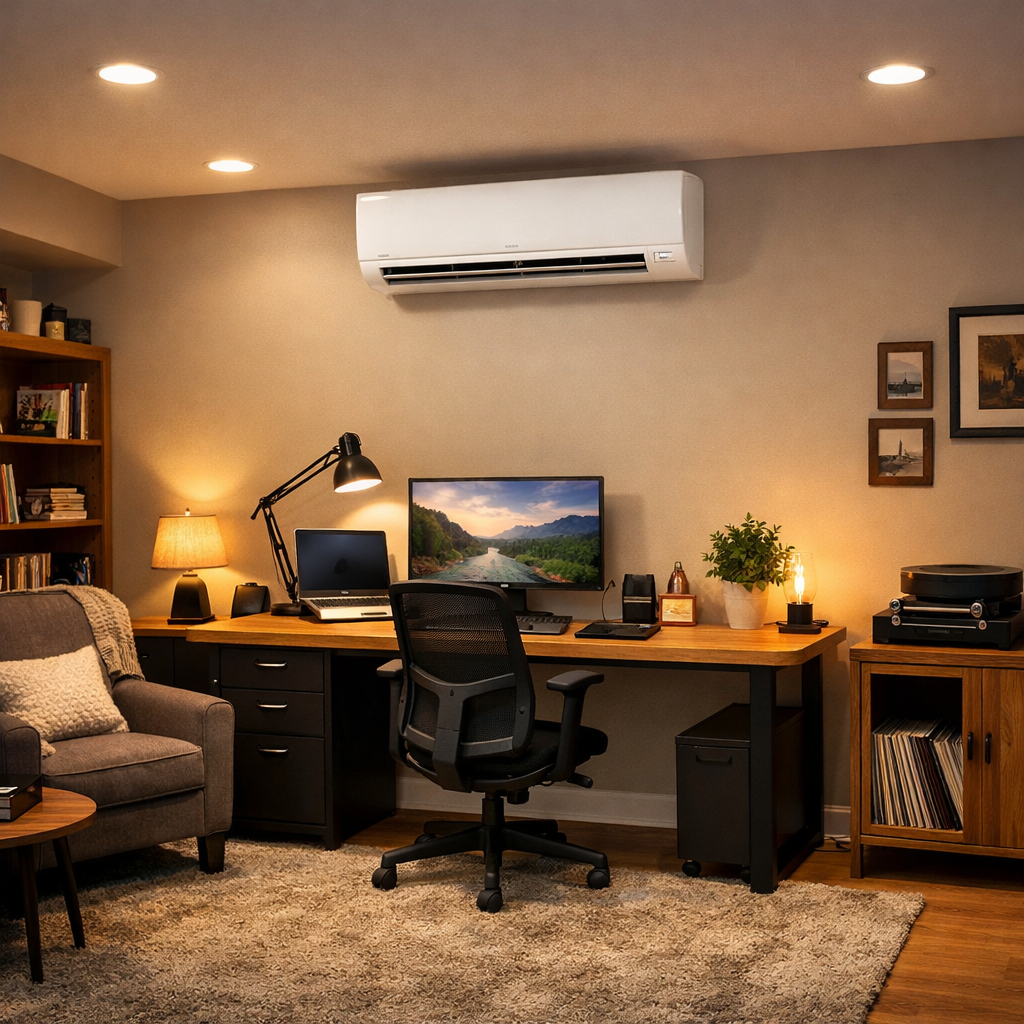
The #1 Problem: Gravity & Drainage 💧
In a normal installation, the drain hose goes out the wall and points down. Gravity pulls the water out naturally. In a basement, the unit is often below ground level. You cannot drain water “up” through the window.
The Solution: A Condensate Pump
You almost certainly need to install a Condensate Removal Pump.
- What is it? A small box installed next to (or inside) the indoor unit.
- What does it do? It collects the dripping water and actively pumps it up against gravity to discharge it outside or into a laundry sink.
⚠️ Warning: Do not try to run the drain hose “up” without a pump. Water will back up into the unit and pour down your newly painted drywall.
Sizing for a Basement (It’s Different) 📏
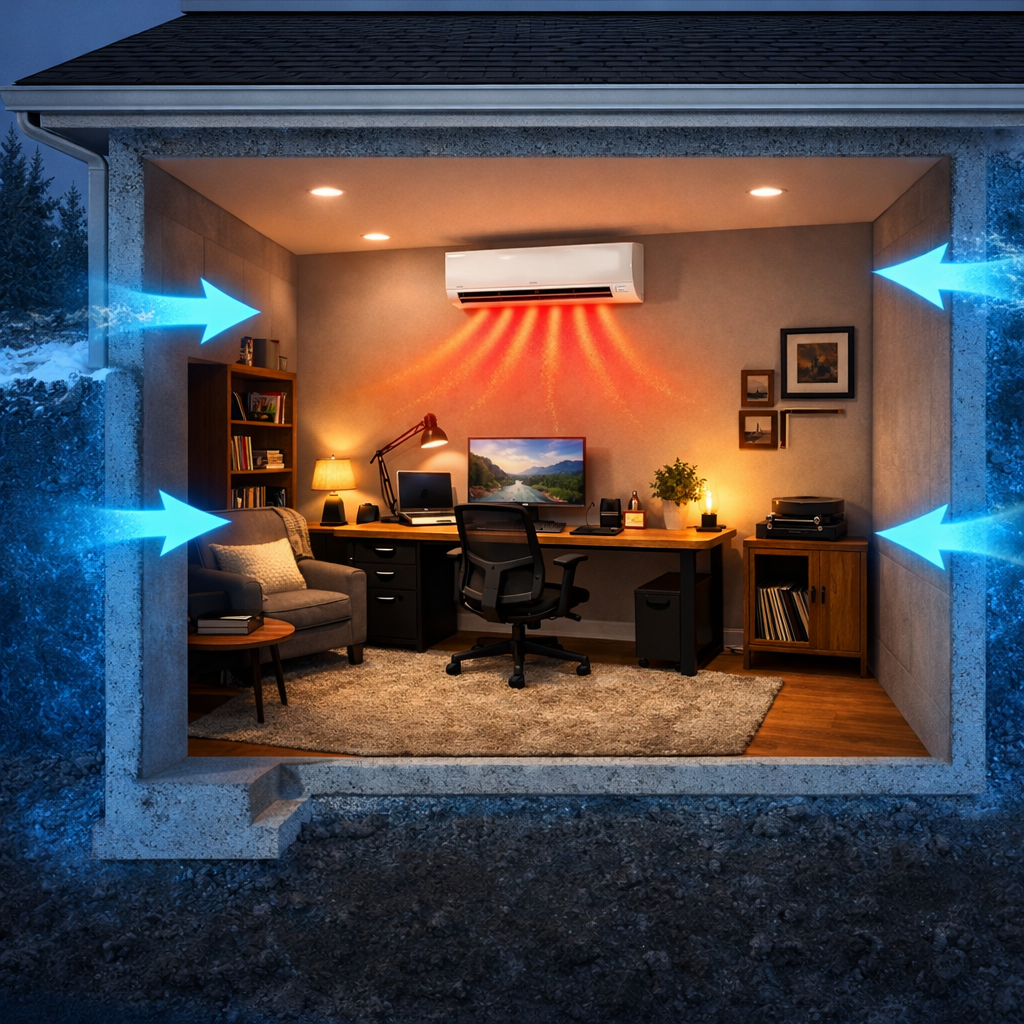
Sizing a basement is not the same as sizing an upstairs bedroom. You have to fight the “Heat Sink” effect.
1. The “Cold Earth” Factor ❄️
The earth around your basement walls stays cold (around 55°F) year-round. In winter, the concrete walls constantly suck the heat out of the air.
- Implication: You often need more heating power than you think.
2. No Solar Gain ☀️
Since you are underground, you don’t have the sun beating down on the windows. This means you might need slightly less cooling power, but the heating load is the real challenge.
👉 Use our Calculator (Select ‘Poor Insulation’ if walls are bare concrete
This page focuses on one detail. 👉 For the bigger picture, start here.
Tackling the “Musty Smell” (Dehumidification) 👃
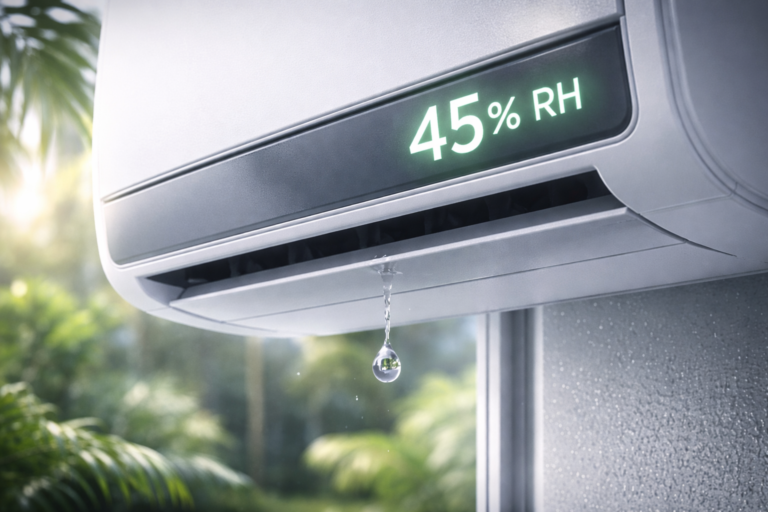
Basements are famous for that damp, moldy smell. A mini split comes with a “Dry Mode”. In a basement, this is your best friend.
Running the unit in Dry Mode for a few hours a week can pull gallons of water out of the air, preventing mold growth and protecting your furniture.
Credit :Airspool channel
Installation Tips: Where to Mount? 📍
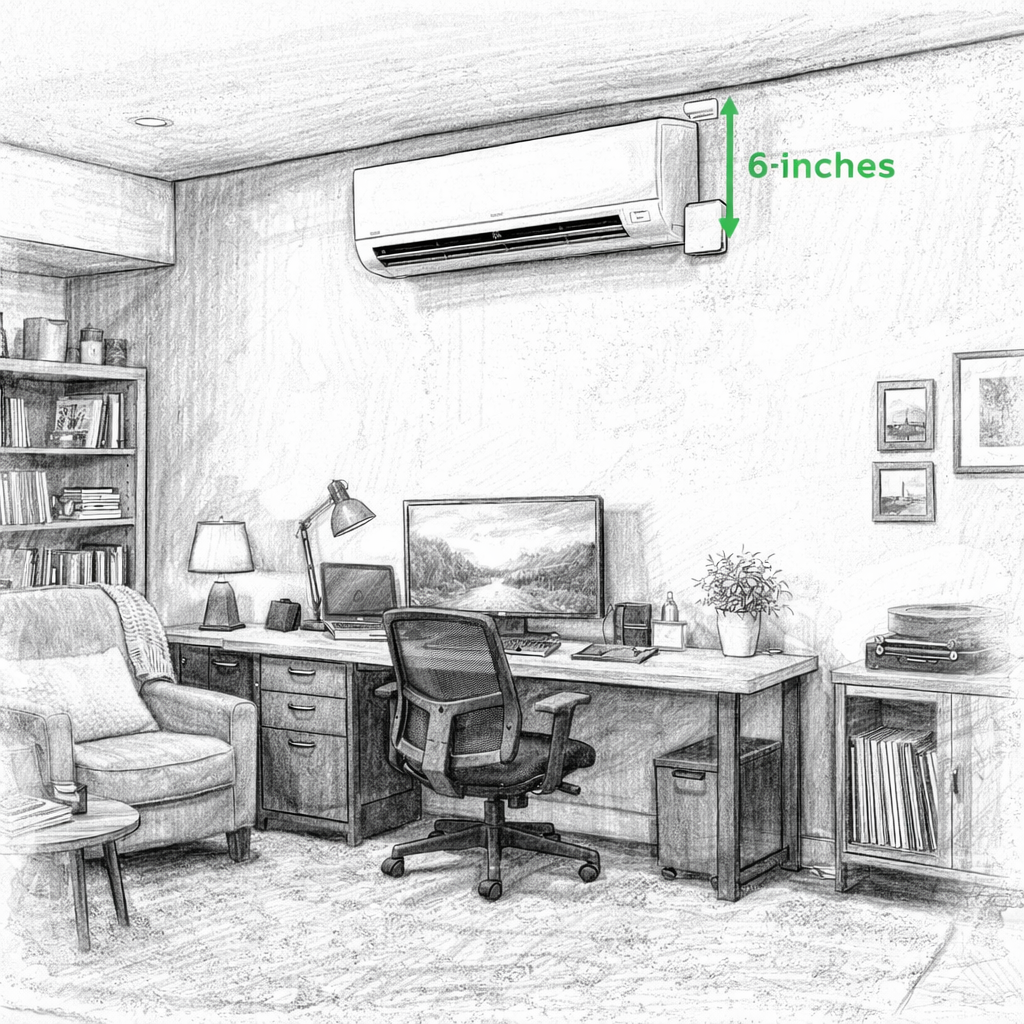
Try to mount the unit on an exterior wall, as high up as possible (remember the 6-inch ceiling gap rule). This makes running the copper lines to the outdoor condenser easier.
Avoid the “Hallway Trap”: Do not put one unit in the basement hallway expecting it to cool the bedrooms. Cold air sinks and will not turn corners well in a basement layout.
Conclusion: The Perfect “Man Cave” Upgrade
A mini split transforms a basement from a “storage dungeon” into a livable home theater, gym, or office.
Your Checklist:
- Buy a Condensate Pump (don’t skip this!).
- Size for Heating (the ground is cold).
- Check for Mold before installing.
Ready to size your project? Don’t let the “Heat Sink” effect fool you. Get the right numbers. 👉 Calculate your Basement Size Here