Mitsubishi Mini Split Error Codes List
(Full Troubleshooting Guide)
As an HVAC engineer who has diagnosed Mitsubishi ductless systems in both residential and rental properties, I can confidently say this:
Most Mitsubishi error codes are not system failures — they are protection signals.
When your unit stops working and the LEDs start blinking, it is easy to panic and assume the worst. Take a deep breath. Mitsubishi engineers designed these codes to shut the system down before expensive permanent damage occurs. In this complete guide, I will walk you through every major error code, what the blinking lights mean, and exactly how to fix them.
How to Read Mitsubishi Mini Split Error Codes
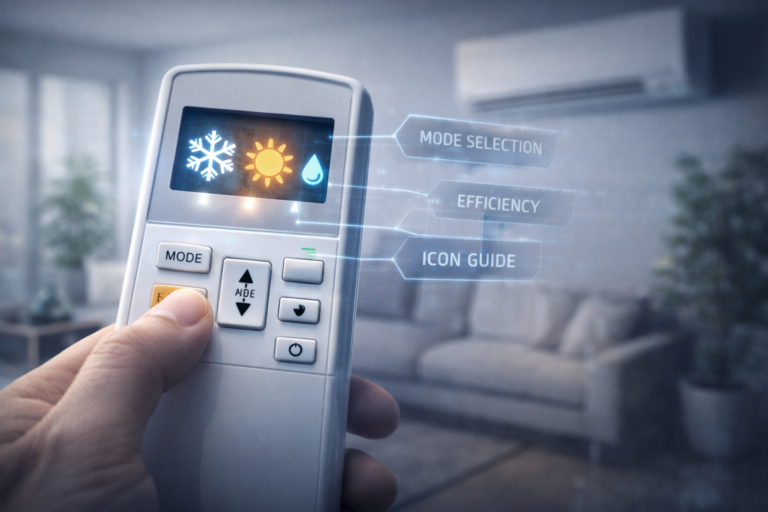
Unlike standard American central air systems, high-end Japanese inverter systems communicate problems in a highly specific way. You can read the codes via:
- Indoor Unit LED Blinking Patterns: Count the flashes. The operation indicator (often green) and the timer indicator (often red) will blink in a specific sequence (e.g., 3 green flashes, 2 red flashes).
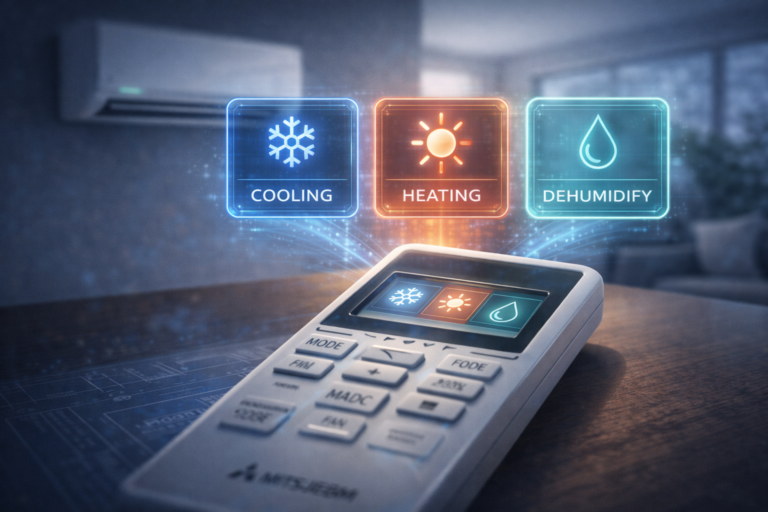
- Remote Display Codes: If you have a wired wall controller (like the MHK2), the exact alphanumeric code (e.g., P6, E6) will display on the screen.
Note: The complexity of these diagnostic boards is exactly why we highly rate this brand in our Mitsubishi Mini Split Review. They protect your investment.
Complete Mitsubishi Mini Split Error Codes List
Here is the diagnostic matrix broken down by category. Use this to identify the severity of your issue.
Sensor & Thermistor Errors
| Code | Meaning | Severity | Fix / Check |
|---|---|---|---|
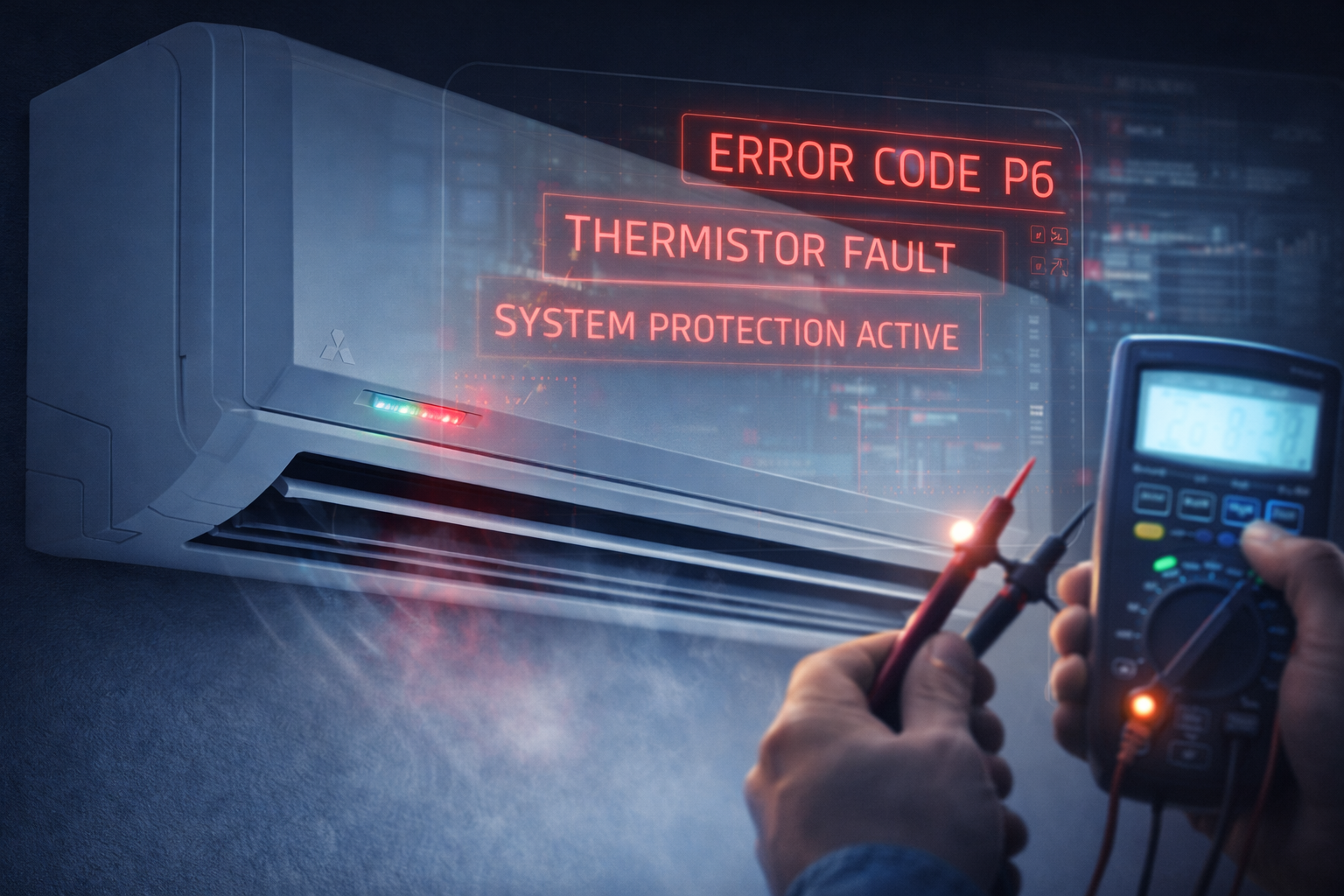
| P6 | Freezing / Overheating protection operation | Moderate | Clean air filters and indoor blower wheel. Check indoor coil thermistor. |
| P8 | Pipe temperature error | Moderate | Verify refrigerant levels. Check outdoor pipe thermistor. |
| E6 | Indoor/Outdoor communication failure | High | Check connecting wire (S1, S2, S3) for voltage drops or loose terminals. |
Communication Errors
| Code | Meaning | Severity | Fix / Check |
|---|---|---|---|
| U1 / U2 | Abnormal high pressure / Discharge temp | High | Check outdoor condenser for blockage (leaves/snow). Possible refrigerant overcharge. |
| Mismatch | Indoor/Outdoor unit capacity mismatch | High | Installation error. The indoor head BTU does not match the outdoor compressor setup. |
Compressor & Refrigerant Errors
Codes like U4, U5, or UP point directly to the heart of the system. These usually indicate a refrigerant leak (low pressure) or an inverter compressor failure. Do not attempt to reset and force the unit to run if you see these codes, as running a dry compressor will destroy it.
Defrost & Heating Errors
If your unit displays a “Standby” message or a slow blinking light during winter, it may not be an error at all. Heat pumps must periodically reverse their cycle to melt ice off the outdoor condenser.
Read our comprehensive guide on mini split sizing for cold climates to understand how defrost cycles impact heating performance.
Mitsubishi Mini Split Blinking Green Light – What It Means
- Normal Operation Blink: A slow, steady blink often means the system is “preparing” to heat or is currently in a standard defrost cycle. Wait 10-15 minutes.
- Fault Blink: Rapid flashing (especially paired with a red timer light) is the unit communicating a specific error code from the table above.
- Reset Procedure: If the unit is unresponsive after a power outage, a hard reset at the breaker is required to clear the false fault.
Mitsubishi Mini Split Not Heating (Common Scenarios)
If your system is running without a blinking error code but is blowing cold air in winter, it is likely an environmental or sizing issue, not a mechanical failure.
Standard models lose heating capacity rapidly below 32°F. Unless you have a Mitsubishi Hyper-Heat (H2i) model, the system might simply be overwhelmed by the weather.
Discover the truth in our guide: Can a mini split really heat a whole house in freezing weather?
How to Reset a Mitsubishi Mini Split
1. Breaker Reset
The most effective method. Turn off the dedicated 220V/110V breaker in your main electrical panel for 5 full minutes, then turn it back on.
2. Remote Reset
Use a paperclip to press the recessed “Reset” button on the handheld remote control if the screen is frozen or glitching.
3. Emergency Switch
Lift the front panel of the indoor wall unit. Press the “Emergency Operation” button to bypass the remote completely.
When You Should Call a Mitsubishi Diamond Contractor
While cleaning a filter (P6) is a DIY job, do not attempt to fix everything yourself. You must call a certified professional for:
- Compressor Faults: Diagnosing a locked rotor or failed inverter drive requires high-voltage testing tools.
- Refrigerant Leaks: It is illegal to vent or handle R-410A/R-32 refrigerant without an EPA 608 license.
- Board Replacement: Mitsubishi PC boards are expensive ($300-$800). A pro can test whether the board failed on its own, or if a shorted fan motor fried the board (which would fry your new board instantly).
Case Study: P6 Error in a 12,000 BTU Mitsubishi Unit
Unit: 12,000 BTU Wall Mount (Installed in a master bedroom).
The Issue: Homeowner reported an intermittent P6 Error Code. The unit would cool for 2 hours, then shut down with a blinking green light.
The Diagnosis: A standard technician might just replace the thermistor (sensor). However, upon engineering inspection, the indoor coil thermistor was misreading temperatures because it was insulated by a thick layer of biological dust and pet dander.
The Solution & Result:
We performed a deep chemical coil cleaning and replaced the compromised sensor. The system stabilized immediately with zero returning errors.
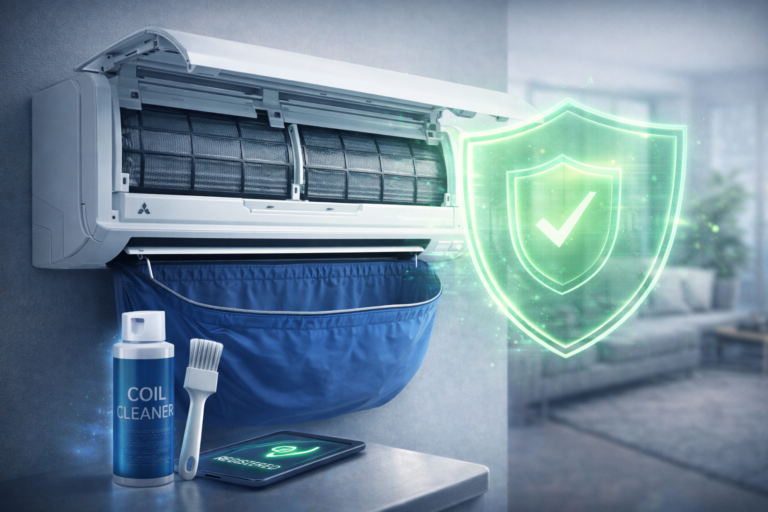
Learn how to prevent this in our guide: How to deep clean a mini split and remove mold.
Preventing Future Mitsubishi Error Codes
The best repair is prevention. To keep your Mitsubishi system running error-free for its 15+ year lifespan:
Surge Protection
Inverter boards are highly sensitive to electrical spikes. Installing a dedicated surge protector at the outdoor disconnect is mandatory. Read our Surge Protector Guide.
Proper Initial Sizing
Units that are the wrong size run constantly or short-cycle, causing premature sensor failure and cooling issues. Always use our Manual J Sizing Guide before installing.
Frequently Asked Questions
Why is my Mitsubishi mini split blinking green light?
A slowly blinking green light often indicates the system is in standby mode, defrost mode, or preparing to heat. However, rapid flashing alongside a red light usually indicates a specific sensor or communication error code that needs troubleshooting.
What does P6 mean on Mitsubishi mini split?
The P6 error code indicates a problem with the freezing/overheating protection operation. It is commonly caused by a faulty indoor coil thermistor, severe dust buildup on the filters or blower wheel, or poor airflow.
How do I reset a Mitsubishi mini split?
To perform a hard reset, turn off the system using the remote. Then, locate the dedicated circuit breaker for the mini split in your electrical panel and turn it off for 3 to 5 minutes. Turn it back on and restart the unit.
Is it safe to run with an error code?
No. Most Mitsubishi error codes are system protections designed to prevent catastrophic compressor failure or electrical fires. Continuing to force the system to run can turn a minor sensor replacement into a $2,000 compressor failure.
Why is my Mitsubishi mini split not heating?
If it is not heating but has no error code, it may be in a normal defrost cycle. If it blows cold air constantly, it could be a refrigerant leak, a failed reversing valve, or an undersized unit struggling against extreme outdoor temperatures.
About the Diagnostics Team
This guide was compiled by the MiniSplitSizer Engineering Team—HVAC professionals experienced in complex ductless diagnostics, PCB testing, and inverter load calculation.
Experiencing persistent issues? Ensure your unit is properly sized for the thermal load using our Free Manual J Lite Calculator.