The Ultimate Mini Split Calculator: Why Standard Sizing Fails (And How Our Engine Fixes It)
Buying a ductless mini split is a major investment, often costing anywhere from $3,000 to $6,000 depending on installation costs. Yet, nearly 60% of homeowners and amateur installers make a critical mistake before they even buy the unit: They guess the size.
If you search for “what size mini split do I need,” most websites will give you a dangerously simple formula: Multiply your square footage by 20. While that might work for a perfectly square room, with average windows, average ceilings, sitting in an average climate… the real world doesn’t work that way.
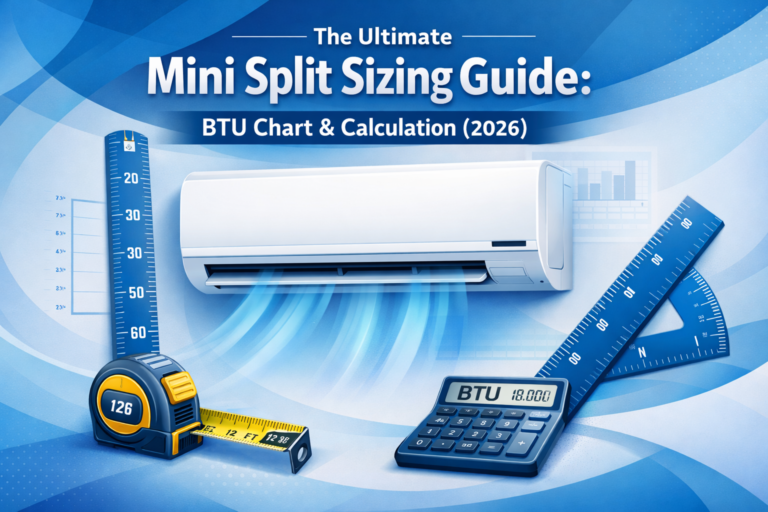
That is why we built the MiniSplitSizer V2.0—the internet’s most advanced, free Manual J Lite Mini Split Calculator. Whether you are a DIY homeowner trying to cool a garage or an HVAC contractor generating a quick estimate, this guide explains exactly how our tool prevents the most expensive mistakes in HVAC.
The $3,000 Mistake: The “Square Footage” Myth
Efficiency & Compressor Wear (24h Cycle)
Result: Compressor never stops. High electricity bills, early breakdown, room stays warm.
Result: Turns on/off constantly. Freezes the room but fails to remove humidity (Cold Swamp).
Result: Inverter ramps down smoothly. Perfect dehumidification, silent operation, lowest energy cost.
Why is the standard “20 BTUs per square foot” rule so dangerous? It completely ignores the laws of thermodynamics. When you rely solely on floor area, you risk two massive failures:
1. Undersizing (The “Always On” Problem)
If you put a 12k BTU unit in a room with 12-foot vaulted ceilings and west-facing windows, it will never catch up. It will run at 100% capacity all day, burning out the compressor early and drastically inflating your daily electricity costs.
2. Oversizing (The “Cold Swamp”)
People think, “I’ll just buy a bigger unit to be safe.” Do not do this. An oversized 24k BTU system in a 400 sq ft bedroom will “short-cycle.” It blasts freezing air and shuts off before it can remove humidity, leading to a clammy room and potential mold growth, especially in high humidity areas.
Inside the Engine: How Our Manual J Lite Works
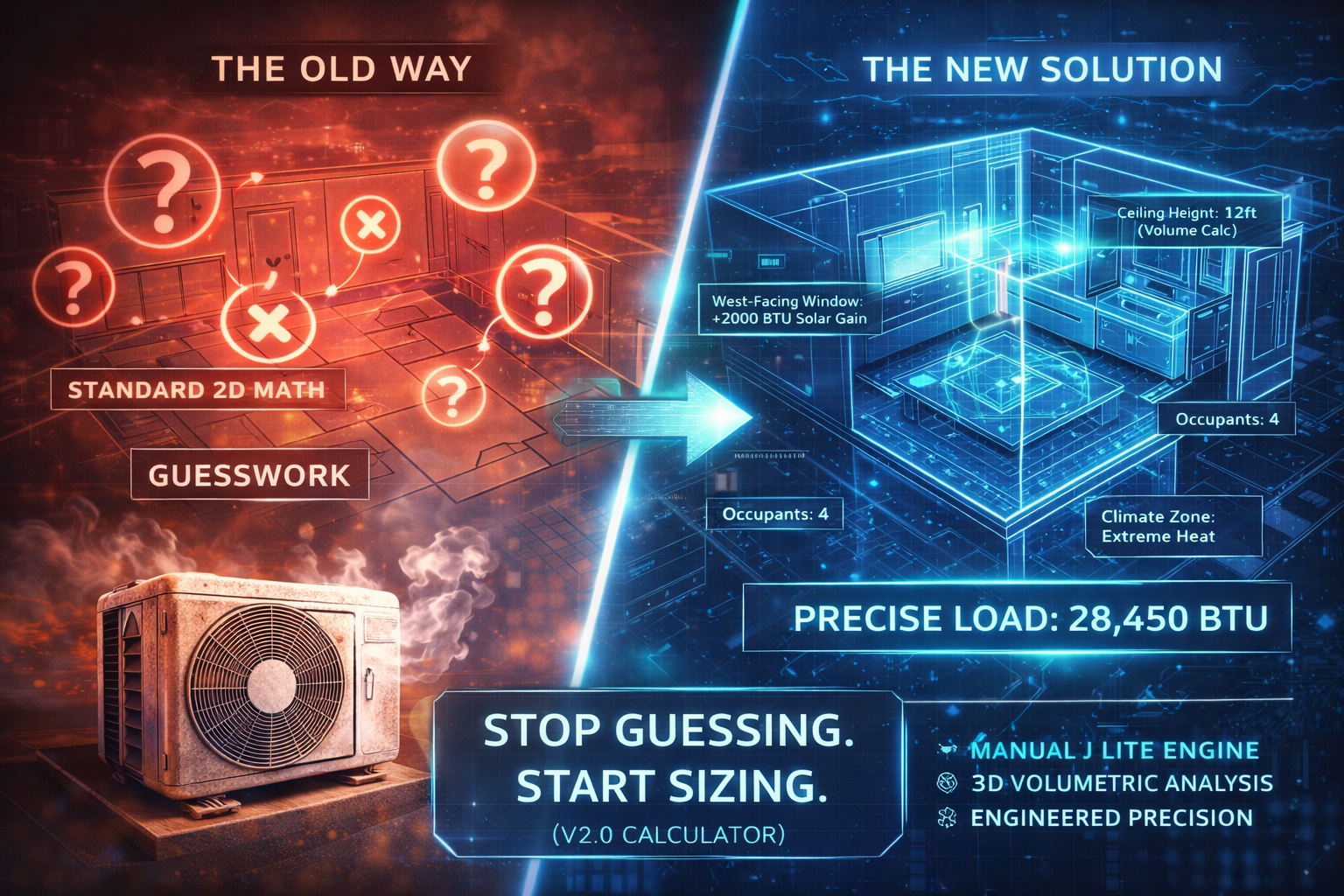
To solve these problems, we stripped down the highly complex ACCA Manual J protocol (the 50-page engineering math used by commercial HVAC pros) and built it into a lightning-fast web app. When you toggle our calculator into “Pro Mode,” it analyzes four distinct physical variables:
-
The 3D Volume Engine (Ceiling Height) A 500 sq ft room with 8-foot ceilings holds 4,000 cubic feet of air. With 12-foot vaulted ceilings, it holds 6,000 cubic feet. That is 50% more air! Our calculator adjusts the BTU load based on precise cubic volume.
-
Smart Climate Zone Modifiers A 400 sq ft room in freezing Minnesota has vastly different needs than one in scorching Texas. We automatically apply a 15% load buffer for Sun Belt heatwaves and a 20% multiplier for extreme Northern winters.
-
Sensible Heat Gains (Sunlight & Glazing) Windows are thermal holes. We add exactly 1,000 BTUs for every standard window and apply percentage modifiers based on the room’s sun exposure.
Case Study: The “Texas Garage” Disaster
The Scenario: A homeowner in Austin wants to turn their 400 sq ft uninsulated garage into a home gym. Standard calculators suggest a 9,000 BTU unit (400 x 20). If installed, the gym would stay at an uncomfortable 85°F.
The MiniSplitSizer Solution: Inputting Area (400), Insulation (Low), Type (Garage), Climate (Hot), and Sun (Direct), our Manual J Lite engine calculates a load of ~26,000 BTUs and recommends a 24,000 to 30,000 BTU System. By using our tool, the homeowner buys the right size the first time.
Built for Homeowners. Trusted by Pros.
Contractors and savvy homeowners can use our “Download PDF Report” feature. With one click, the tool generates a clean, professional Manual J Lite sizing report.
Hand this PDF to your local HVAC installer. It proves you know exactly what your home requires, preventing unscrupulous contractors from upselling you on massive, oversized units or a complex multi-zone system you don’t actually need.
Frequently Asked Questions
What size mini split do I need for a 20×20 room?
A 20×20 room is 400 sq ft. In a standard home with good insulation and 8-foot ceilings, a 9,000 to 12,000 BTU (1 Ton) mini split is perfect. However, if this is a sunroom made of glass, you may need an 18,000 BTU unit like the Mitsubishi 18k system. Use our calculator to be exact.
What is the difference between Cooling Load and Heating Load?
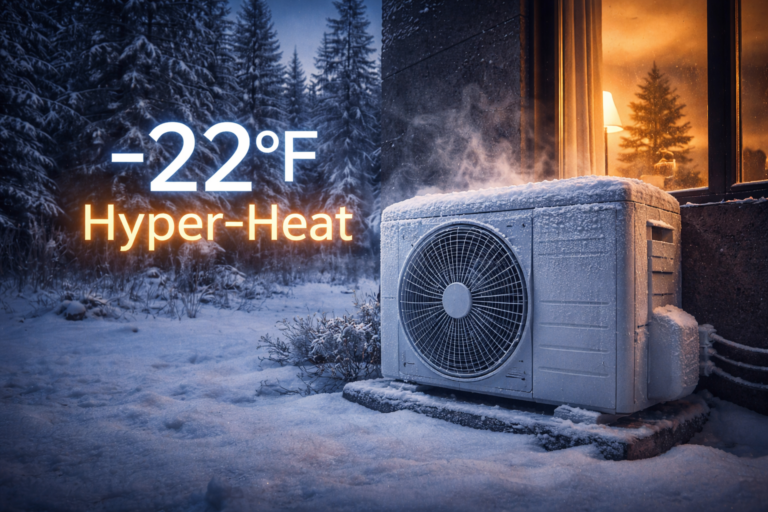
Cooling load is the amount of heat energy (BTUs) the AC must remove from the room. Heating load is the amount it must add. In cold climates, the heating load is usually significantly higher, meaning you must size the unit based on its winter performance.
Are standard 20 BTU per sq ft calculators accurate?
No. Standard 2D math fails to account for ceiling height (3D volume), sun exposure, occupants, and severe climate zones. Relying on them often leads to purchasing budget mini splits that are the wrong size for your specific thermal load.
Stop Guessing. Start Sizing.
Don’t risk your comfort and your wallet on basic math. Accurate sizing is the most important step in your ductless journey.
Launch The Free Calculator Now